When engineers and buyers contact us at Forte Precision Metals, 316 stainless steel comes up more than any other grade for marine and medical work. We’ve supplied it since 1994, and we know exactly where it performs and where it doesn’t. This guide gives you a clear answer before you commit.
Most buyers come to us already leaning toward 316, but leaning isn’t the same as knowing. The right grade decision saves you money, prevents field failures, and keeps your project on schedule. Read through, and by the end, you’ll know whether 316 is your answer or whether a different grade serves you better.
Why 316 Stainless Steel Dominates Marine and Medical Sourcing
Grade 316 has earned its reputation across two of the most demanding industries in metals sourcing. Marine environments expose components to continuous chloride contact, and medical applications demand materials that stay stable against body fluids and repeated sterilization cycles. Few grades cover both requirements as consistently as 316 does.
What sets it apart from other austenitic grades is molybdenum. That single addition gives 316 the best corrosion resistance among standard austenitic grades we carry. When you spec 316 for a saltwater pump shaft or a pharmaceutical fitting, you’re working with a material that has been serving marine and medical buyers since we opened in 1994.
What Makes 316 Different From Other Grades
316 is an austenitic, non-magnetic stainless steel. The key addition is molybdenum, which gives it the best corrosion resistance among standard austenitic grades. That matters most when your part faces chlorides, saltwater, body fluids, or aggressive cleaning chemicals.
Because of that molybdenum content, 316 stays stable in environments where grades like 304 begin to pit and corrode. Engineers specify it not because it’s the cheapest option, but because it’s the one that doesn’t fail quietly in demanding conditions.
How 316 Performs in Marine Environments
Saltwater accelerates corrosion fast. Pump shafts, valve bodies, and fasteners made from 304 can degrade quickly in continuous chloride exposure. Grade 316 handles that environment reliably, which is why marine buyers consistently reach for it.
If your build involves welding, 316L is the better choice. It’s the extra low carbon variant, suited for marine reactor vessels and welded assemblies. Lower carbon content prevents sensitization at weld heat-affected zones, which is a real failure point in welded stainless fabrications.
Why Medical and Pharmaceutical Teams Rely on It
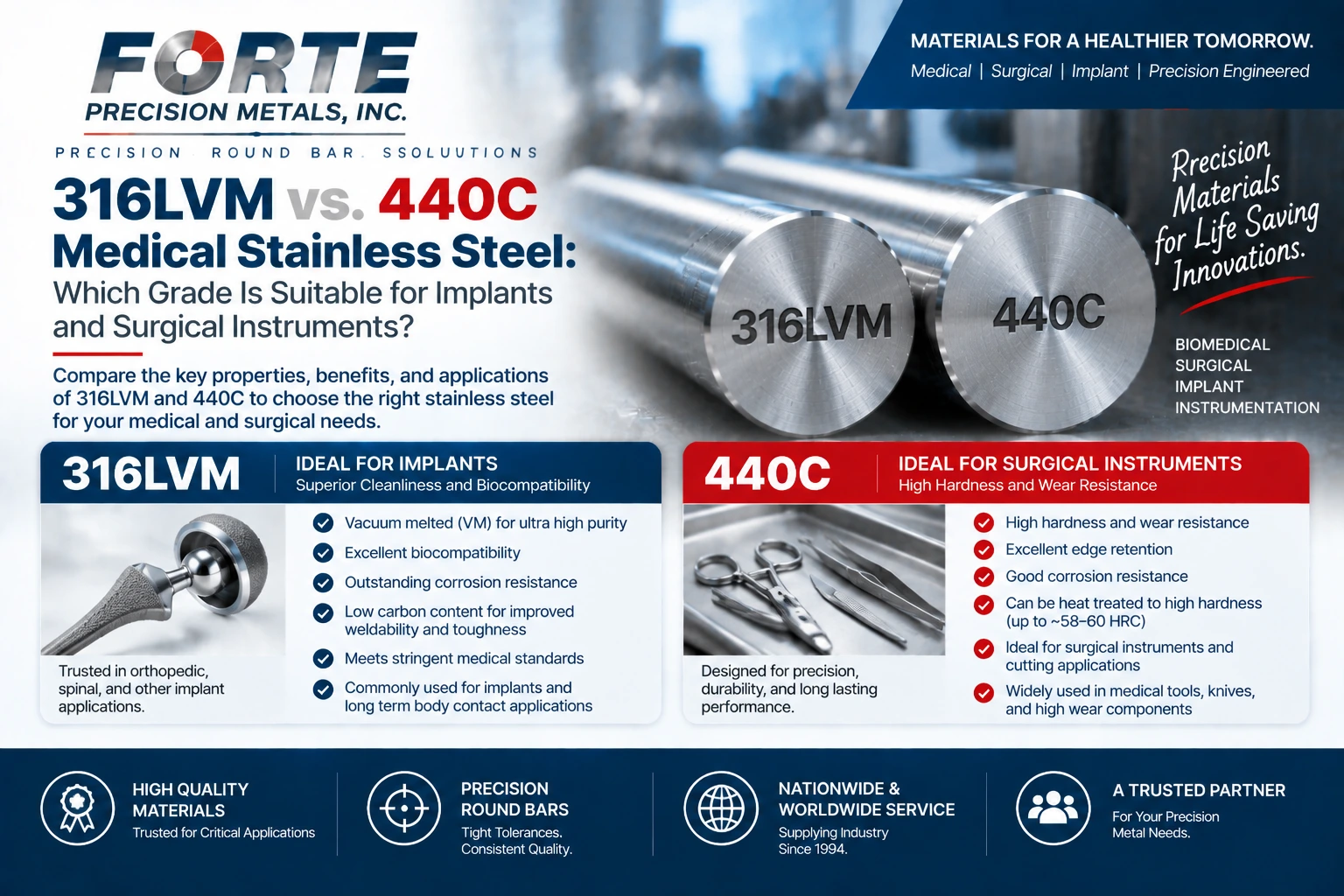
Our surgical metal line carries grades 316, 420, and 440. For implant components and instruments requiring strong corrosion resistance against body fluids, 316 is the standard starting point. It’s also the go-to grade for pharmaceutical reactors and fittings that contact process chemistry or aggressive cleaning agents.
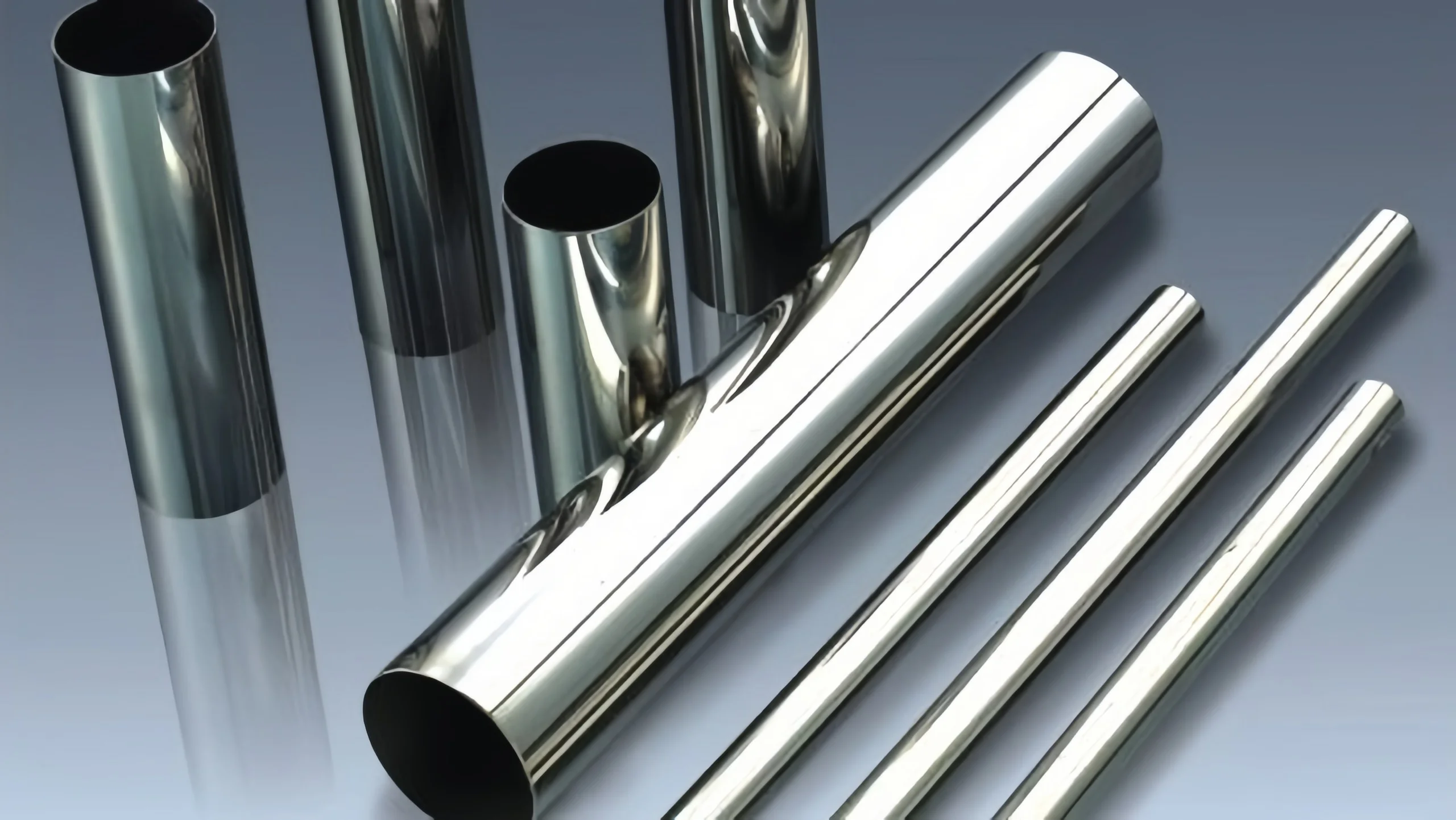
Surface finish is critical in these applications. We can take a 316 round bar to a number 8 mirror finish on site. We also offer electroplating and custom stainless steel polishing, so you’re not sourcing the bar from one supplier and shipping it elsewhere for finishing.
When 316 Is the Wrong Call
If your environment doesn’t involve chlorides, grade 304 handles complex forms across food processing and general industrial applications at a lower cost. Specifying 316 where 304 performs equally well adds expense without adding protection.
When hardness is the governing requirement rather than corrosion resistance, 420 or 440C fits better. Grade 420 is harder than 410 and is used in surgical instruments and cutlery. Grade 440C carries the greatest strength in the 440 series. For extreme environments beyond 316’s range, we carry Hastelloy C22 through our alloy product line.
Grinding and Machining 316 to Tolerance
Precision work in marine and medical applications leaves no room for error. Our centerless grinding handles bars up to 7 inches in diameter and up to 24 feet in length, producing accurate roundness and a polished surface finish. Custom machining handles parts at a tolerance of plus or minus 0.005 inches, and the shop is CNC and CAD/CAM equipped.
Metal turning holds a tolerance of plus or minus 0.001 inches on stainless, alloy, carbon, aluminum, and copper. Milling holds that same tolerance for pockets, holes, slots, and 3D surface contours. Bar chamfer and bar straightening are both available on-site when your 316 bar needs clean ends or a corrected profile.
Certifications, Packaging, and Shipping
Our quality system is ISO 9001:2015 certified, covering Advanced Quality Planning, Statistical Process Control, Gauge R&R, and Machine Capability Studies. That certification has been in place since 1994, not added recently.
We ship nationally and worldwide. Packaging options include cardboard tubing, wooden boxes, wood crates, paper wrapping, UPS packages, and custom wood boxes. If you have specific incoming inspection or cleanroom receipt requirements, include them with your quote request.
Get Your 316 Stainless Steel Order Started Today
Ready to move forward on your 316 order? Call us at (847) 451-8888, Monday through Saturday, 7 AM to 5 PM. You can also submit a request at fortemetals.com. We’re at 9234 Parklane Ave, Franklin Park, Illinois.
Getting the grade right the first time saves rework, cost, and delays. Whether you’re confident in 316 or still comparing options, our team is ready to help you finalize the spec and get your order moving.
FAQs
What is the difference between 316 and 316L for marine use?
Both grades have molybdenum for corrosion resistance. 316L has lower carbon content, making it better for welded assemblies like marine reactor vessels.
Does Forte Precision Metals carry 316 in precision-ground bar?
Yes. Our centerless grinding handles up to 7 inches in diameter and 24 feet in length. Include your tolerance and finish requirements in your quote.
What other grades do you carry for medical applications?
Our surgical metal line includes grades 316, 420, and 440. The right grade depends on whether hardness or corrosion resistance is your primary requirement.
Can you polish a 316 stainless bar to a medical finish?
Yes. We offer number 8 mirror finish, specific roughness average finishes, and electroplating. Include your surface finish requirement when requesting a quote.