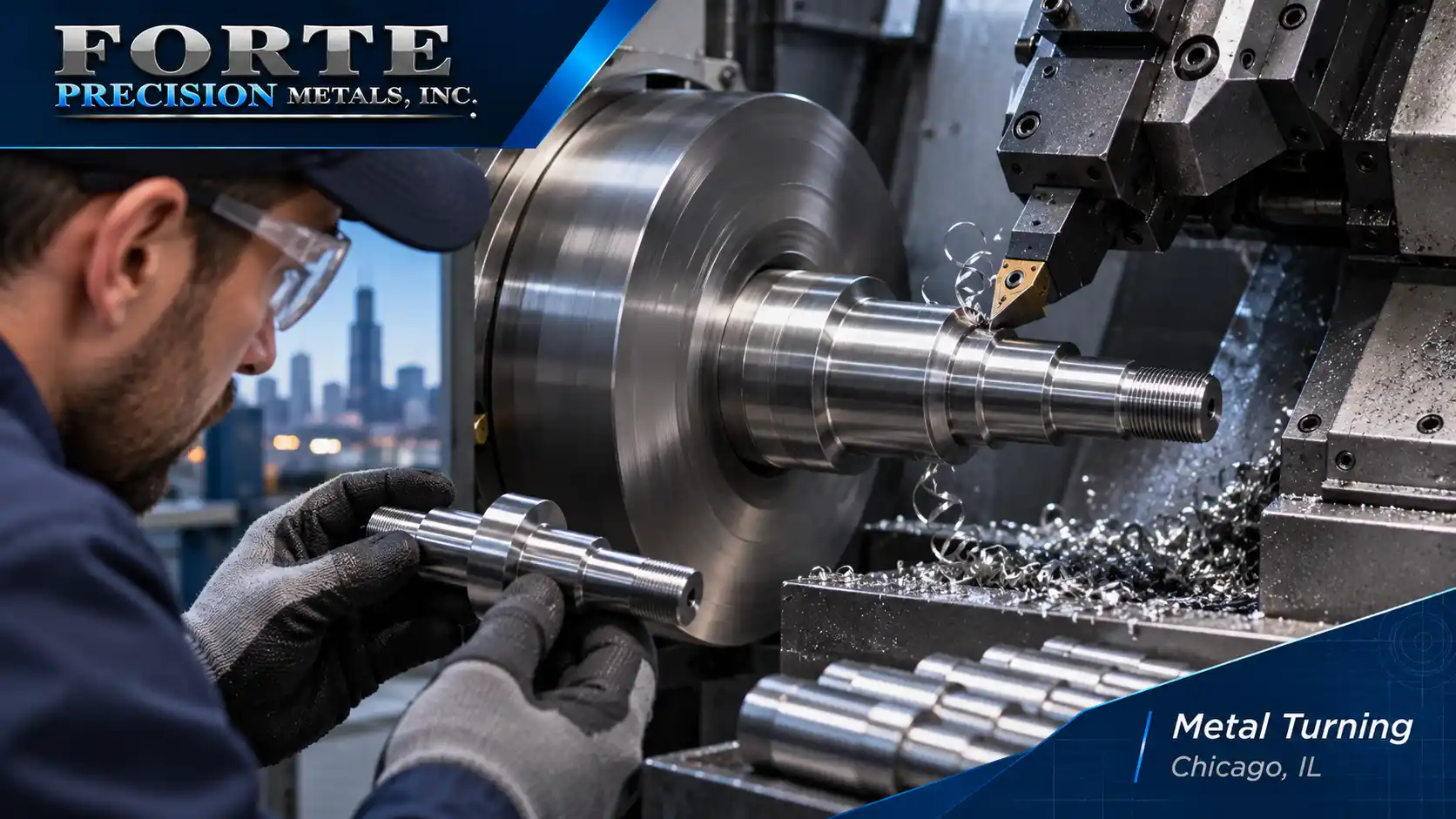
Shafts, bushings, collets, spindles, and axles have one thing in common. Each is built around a centerline, and the features that matter most on them have to line up with that axis. That geometry is exactly what metal turning is designed to produce, which is why it sits at the center of so many precision component jobs.
For engineers, machinists, and buyers in Chicago, IL, here’s how turning works, where it fits, and what to specify so a turned part comes out the way the drawing intends. Forte Precision Metals, Inc. is an ISO 9001:2015 certified round bar supplier in Chicago, and metal turning is one of the services we perform alongside our precision ground and cold finish steel round bars.
What Metal Turning Contributes to Precision Components
Geometry, tolerance, material, and starting stock each shape how a turned part comes out. Understanding those details, along with any surface requirements, gives you a starting point for deciding how turning fits into the manufacturing work your part requires.
What Turning Produces, and Why Shape Comes First
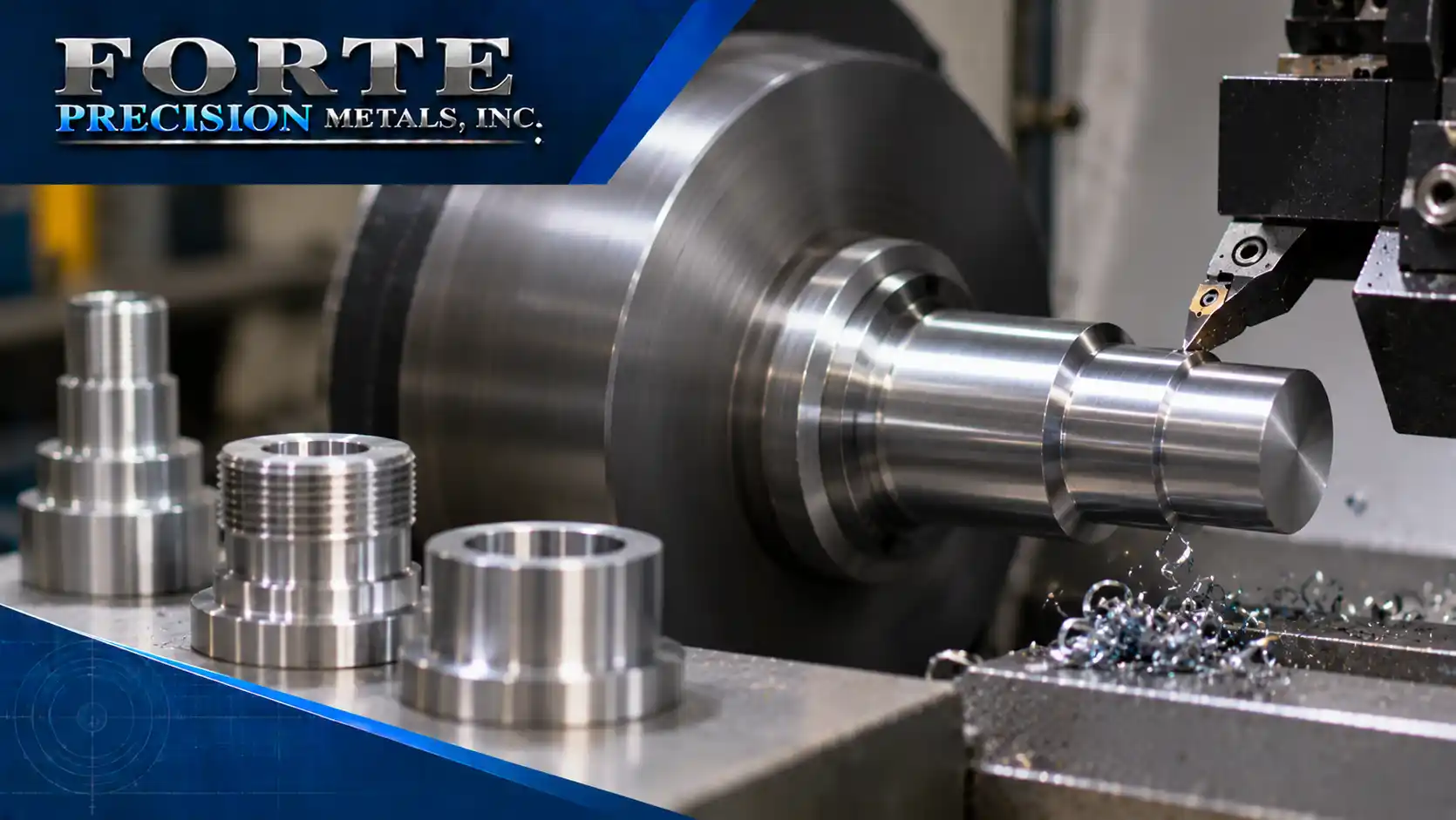
In turning, the workpiece rotates while a cutting tool removes material, so every feature it forms is shaped around the axis of rotation. Our metal turning produces axis symmetric rotational components, meaning parts whose working features share a single centerline.
That gives you a simple test. If a feature is round and centered on the part’s axis, turning may be a suitable operation. Slots, pockets, and holes away from the centerline may require additional machining, such as milling, depending on the design. Sorting features this way early makes it much easier to see how a part will actually be made.
What ±0.001 Inch Means on a Turned Diameter
Our turning work is done to a tolerance of ±0.001 inch. On a diameter with that bilateral tolerance, the difference between the minimum and maximum acceptable measurements is 0.002 inch. Put the required tolerance next to each diameter that needs it, so nothing depends on a general note.
Fit diameters, such as bearing seats or surfaces that mate with another part, are often where dimensional accuracy matters most. Not every turned surface requires the same tolerance, so identify the dimensions that control fit and specify appropriate tolerances for the remaining features. That keeps attention where the part depends on it.
Choosing a Material That Turns Well
We turn stainless, alloy, carbon, aluminum, and copper. Within those groups, some grades are chosen with machining in mind.
In stainless steel, 303 contains added sulfur for improved machinability and is used for nuts, bolts, and gears. 440F is a free machining, high carbon grade suited to non galling, high hardness applications. On the alloy side, 4130 is machinable, weldable, and ductile, with applications in aircraft, automotive work, and hydraulic tools. Carbon steel is machinable as a family, and copper’s excellent conductivity suits turned parts headed for electrical work.
Why the Starting Bar Matters
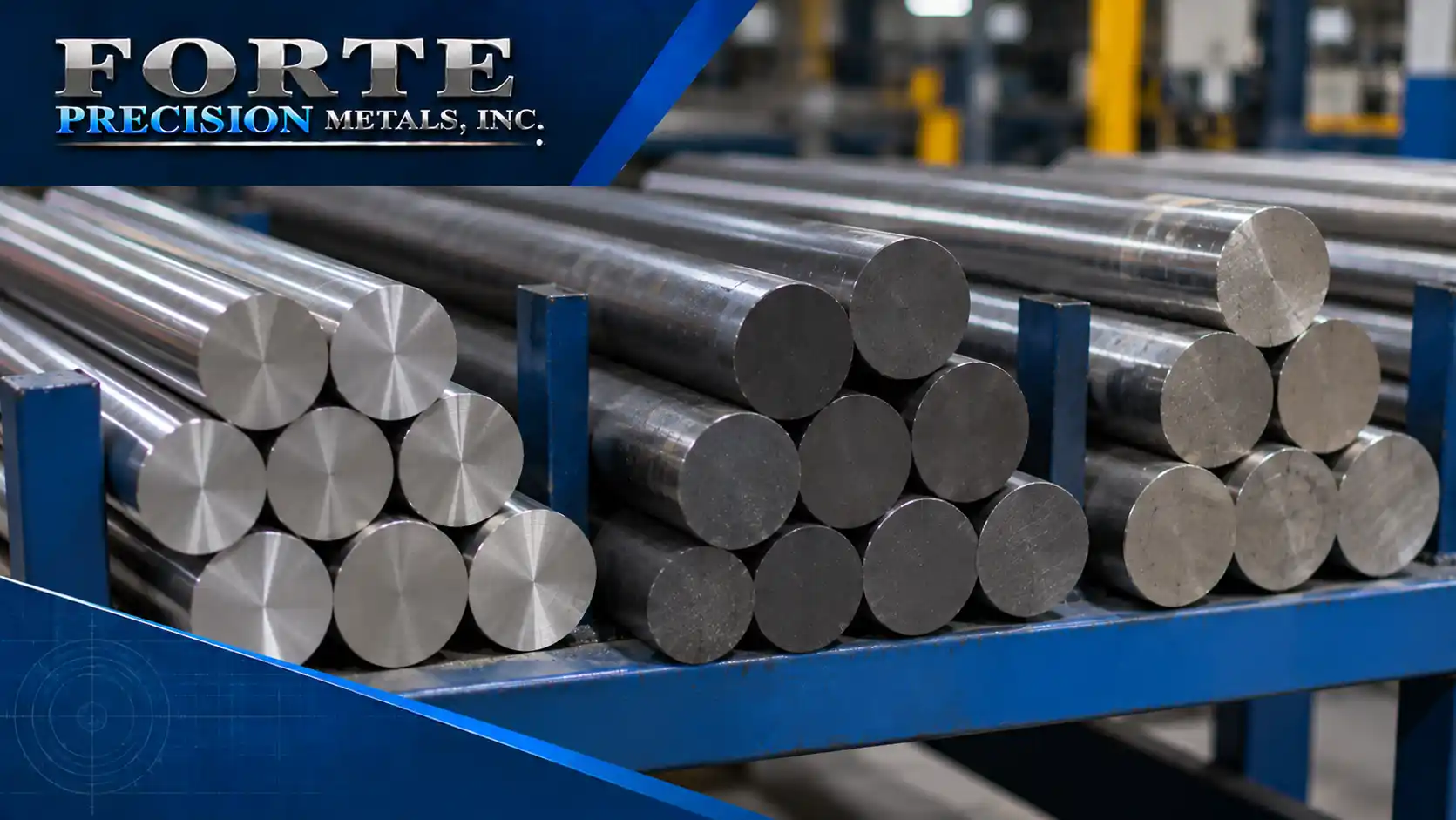
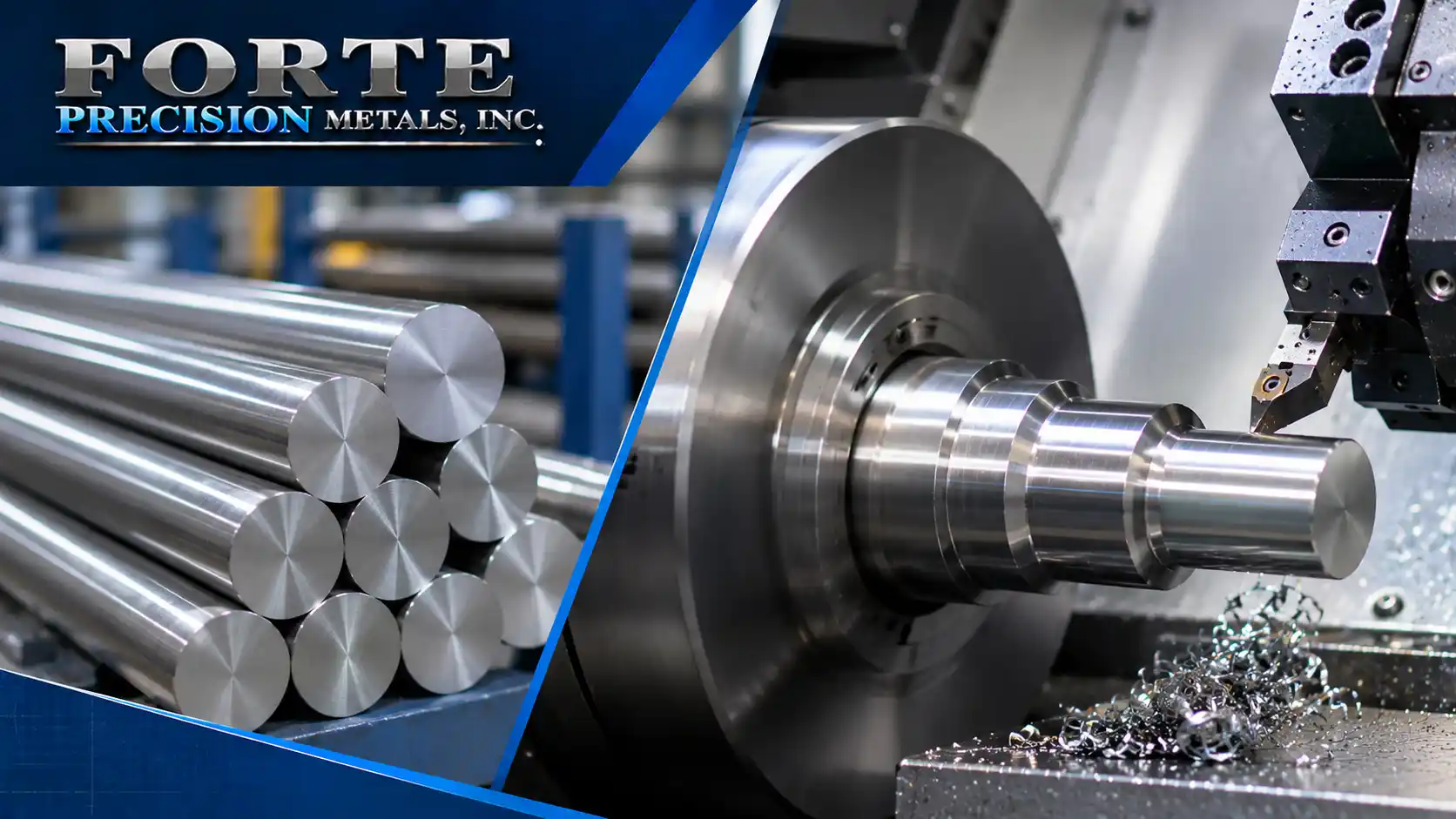
When a turning project starts with round bar stock, the condition of that material is worth considering before machining begins. Our core products are precision ground steel round bars and cold finish steel round bars.
Ground stock comes from our in house centerless grinding, which produces accurate roundness and polish. We also provide rotary straightening for ferrous and nonferrous bars when the material requires it. Telling us whether a turned part should start from ground or cold finish bar is part of specifying it well.
When a Turned Part Needs More Than Turning
Plenty of components are mostly round with a few features that aren’t. Milling adds those features, from pockets and slots to holes and 3D surface contours, also to ±0.001 inch.
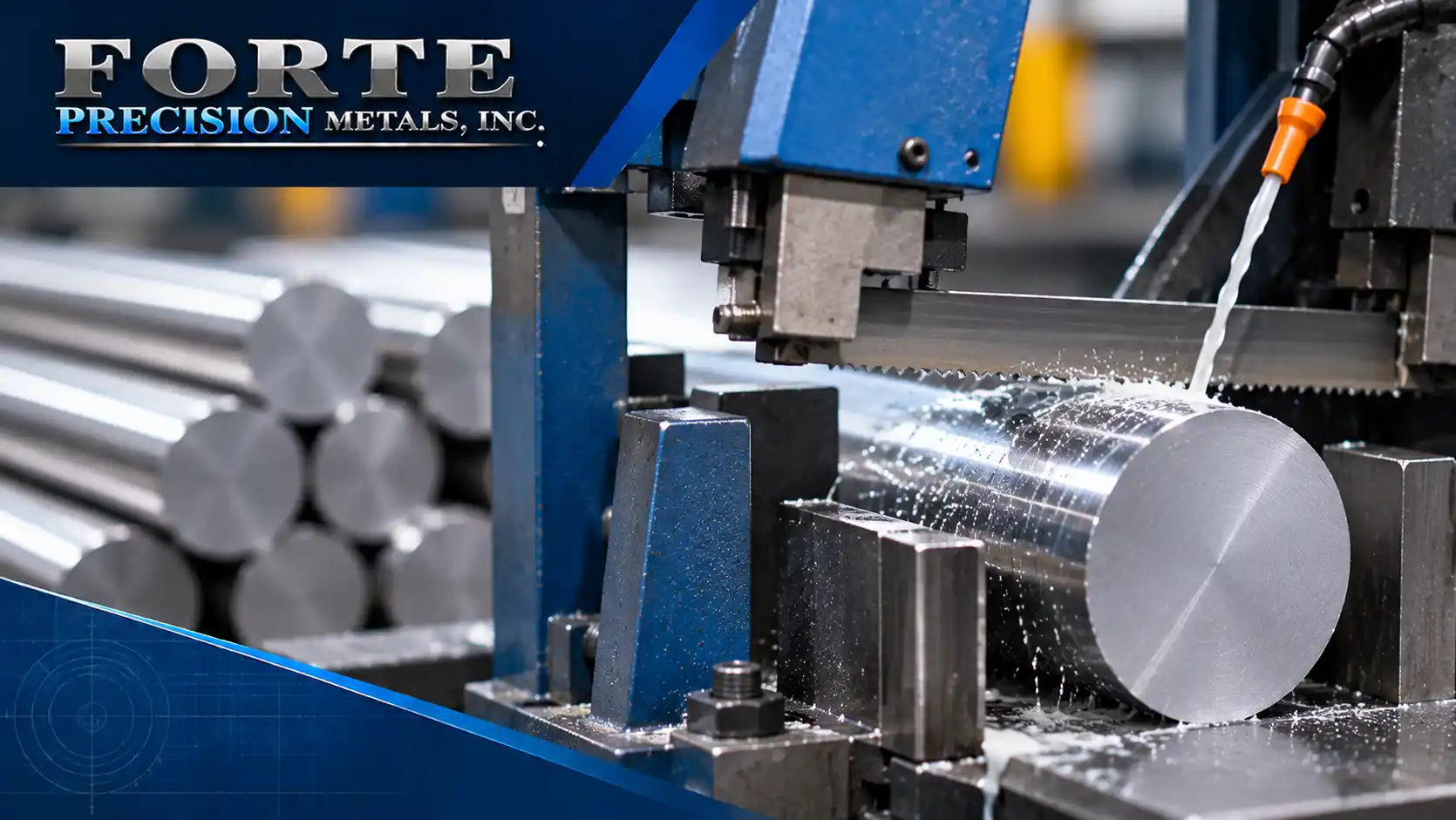
Larger turned parts can move to custom machining, which handles work up to 10 inches in diameter and 8 feet long. If the turned surface needs a specified finish afterward, polishing can bring it to a specific roughness average.
Confirming the Numbers on Turned Parts
A 0.002 inch band only means something if the measurement behind it can be trusted. Gauge R&R helps evaluate measurement variation associated with the equipment and the people performing measurements, including repeatability and reproducibility. Machine capability studies help evaluate whether equipment can meet specified dimensional requirements under the conditions being assessed.
Both are part of the ISO 9001:2015 quality system at Forte Precision Metals, and both matter most on the diameters your fits depend on.
Conclusion
Turning earns its place on parts built around a centerline. What makes a turned component precise is the combination behind it: geometry that suits the process, tight tolerances called out where fits depend on them, a material chosen with machining in mind, and starting stock in good condition.
If you have a shaft, bushing, or other turned part on the drawing board, send the print through our request a quote form, or call (847) 451-8888, Monday through Saturday from 7 AM to 5 PM. We’ll tell you which features turning will handle and which need another operation.
FAQs
How do I know if my part should be turned?
Look at where the main features sit. If they’re round and share the part’s centerline, turning may be a suitable core operation. Slots, pockets, and holes away from the centerline may require milling or another appropriate machining process. Send the drawing and we can talk through which operations apply.
Can a turned part start from precision ground bar?
Yes. Precision ground and cold finish steel round bars are core products for Forte Precision Metals, and centerless grinding is done in house. Note the bar condition you want on your request.
Does every turned diameter need a ±0.001 inch tolerance?
No. That’s the tolerance our turning work is done to, but the diameters that control fit are the ones that need a callout that tight. Let the remaining features follow the general tolerance on your drawing.