On a one off job, a saw cut is a single decision. On a production order, that same decision repeats on every piece in the run. A length that’s slightly off, an end left with a burr, or pieces grouped the wrong way stop being one problem and become a problem across the whole order. Planning the cut list before the order goes in helps reduce those risks and gives everyone a clearer set of requirements to follow.
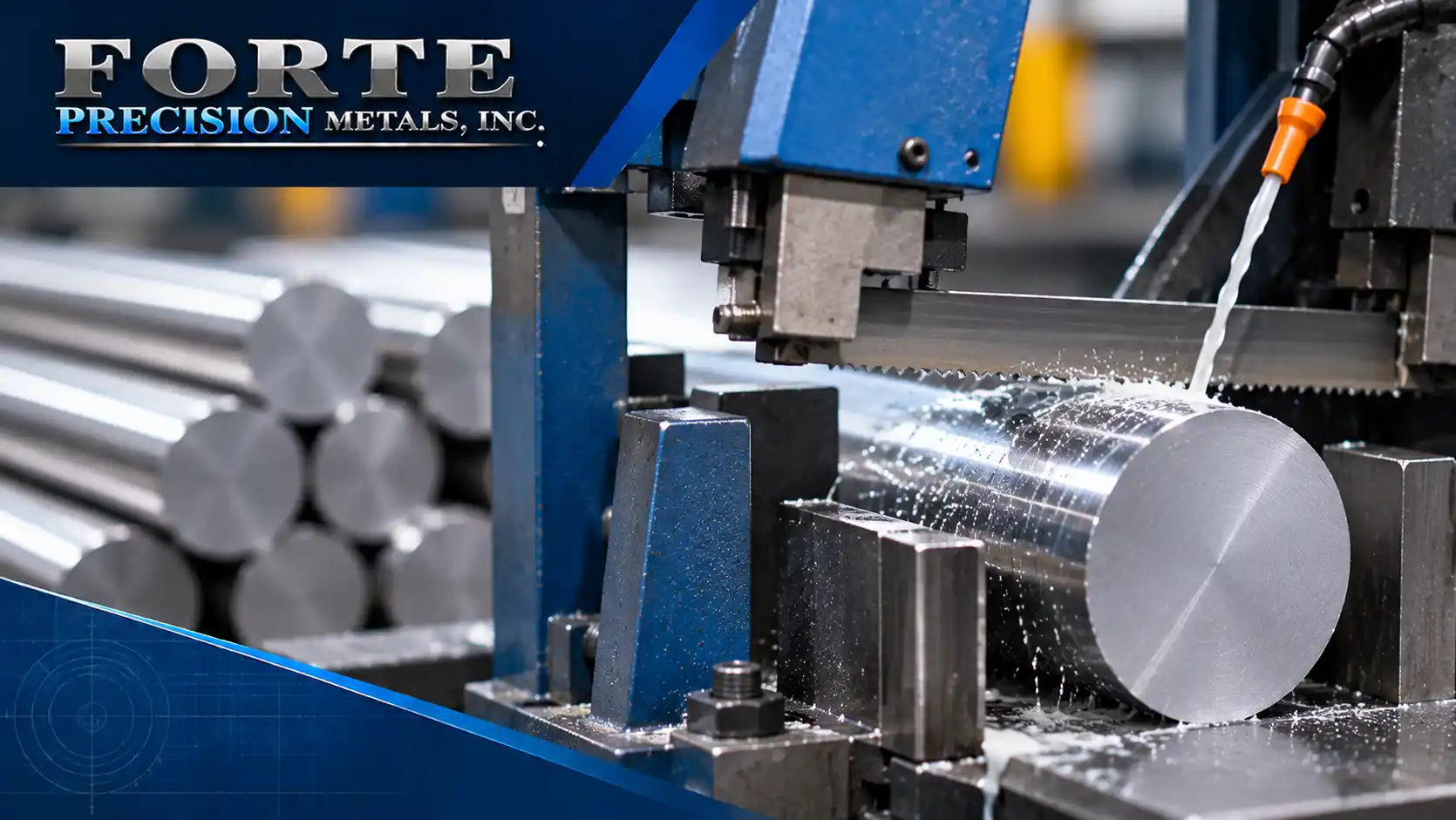
For production buyers in Franklin Park, IL and around Chicago, here’s how we’d suggest planning cut to length saw cutting with us. Forte Precision Metals, Inc. is an ISO 9001:2015 certified round bar supplier in Chicago, IL, and our CNC saws handle cut to length jobs on single bars and on bundles.
What to Settle Before a Production Saw Cutting Order Reaches the Saw
Before we begin a production cutting order, the cut list should clearly identify the material, required lengths, quantities, and any additional finishing or packaging needs. These details help establish what each piece requires and make the order easier to review before cutting.
Decide Whether Each Length Is a Finished Size or a Blank
The most important number on a cut list is the length, and it can mean two different things. Sometimes the saw cut is the final length of the part. Other times the cut piece is a blank that will be turned, milled, or machined afterward, and its length has to leave room for that work.
Say which one you mean on the order. If it’s a blank, note the operations that follow so the length can be planned around them. If the blanks will go on to our custom machining, include their dimensions so we can confirm they fit within its range of parts up to 10 inches in diameter and 8 feet in length.
Organize the Cut List by Length and Quantity
Many production orders include more than one length. Group identical pieces together and give a quantity for each length, rather than scattering the same size across several lines. That makes the list easier to check on both ends.
Our saws handle single bars and bundles, so tell us how each length should be grouped for shipment. For recurring orders, use consistent part numbers, dimensions, and specifications across releases to reduce confusion and make order details easier to compare.
Start From the Bar That Suits the Part
A cut list only works if the bar behind it is right. Forte Precision Metals supplies precision ground and cold finish steel round bars and stocks nine material families in all. When preparing a production cut list, include the exact material grade and bar condition alongside each required length.
Different production parts call for different steel grades. For example, 410 stainless steel is used for components such as nuts, bolts, and bushings, while 8620 alloy steel is commonly used for camshafts, gears, and fasteners.
If your order requires ground stock, specify the finished diameter and surface requirements. We perform centerless grinding in house and also provide bar straightening for ferrous and nonferrous materials. Include any straightness requirements that matter to your application.
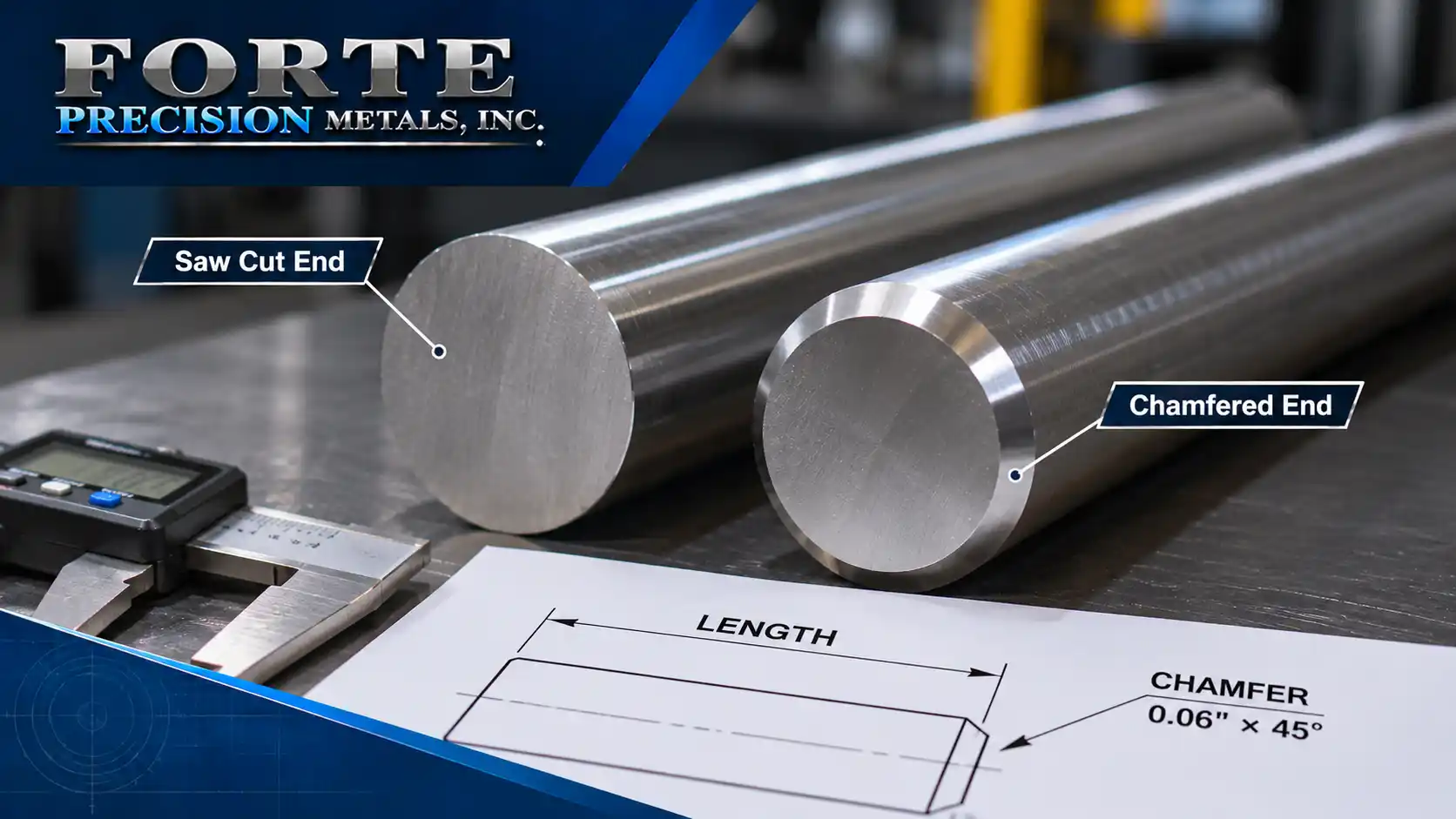
Specify the End Condition Alongside the Length
A saw cut leaves an end, and on a production run that end repeats on every piece. Bar chamfering creates close chamfered ends and removes burrs and sharp edges. If your blanks need chamfered or deburred ends, put that next to the length on the cut list, including the required chamfer dimensions and angle where applicable. This keeps the end condition clear for every piece in the order.
Keep Every Piece in the Run Consistent
When a production order calls for repeated pieces with the same dimensions, consistency becomes especially important. We operate under an ISO 9001:2015 certified quality management system.
Statistical process control helps monitor changes in manufacturing processes over time, and it sits alongside machine capability studies in our quality practices. Both work best when the order spells out what each piece needs. If your cut lengths carry a tolerance, put it on the order so it can be reviewed before cutting starts.
Plan How the Cut Pieces Will Travel
Cut pieces may need different packaging arrangements depending on their lengths, quantities, and handling requirements. Let us know whether lengths should be separated, how pieces should be grouped or counted, and where the order is headed. Packaging options range from cardboard tubing and paper wrapping to boxes and wood crates, and we ship nationally and worldwide.
Conclusion
A production saw cutting order is only as good as its cut list. Settle whether each length is finished or a blank, group quantities by length, choose the grade and bar condition, define the ends, flag any length tolerance, and decide how the pieces should ship. With those details defined, the production order has a clear set of cutting, finishing, and handling requirements.
When your cut list is ready, send it through our request a quote form, or call (847) 451-8888, Monday through Saturday from 7 AM to 5 PM. If your next release is already on the schedule, the Forte Precision Metals team will work through the cut list with you line by line.
FAQs
Should I order cut pieces or full length bars for a production run?
It depends on how your operation is set up. If you cut bars yourself, full length stock may suit you. If you want pieces ready for the next step, our CNC saws handle cut to length work, and the cut list is where you define it.
Can you cut bundles as well as single bars?
Yes. Our saws handle both. Tell us on the order which lengths you’d like cut and grouped together and how you want them bundled for shipment.
Can cut blanks be turned or milled afterward?
Turning, milling, and custom machining are all part of our services. Note on your request which operations each blank needs, and whether the cut length already includes room for that work.