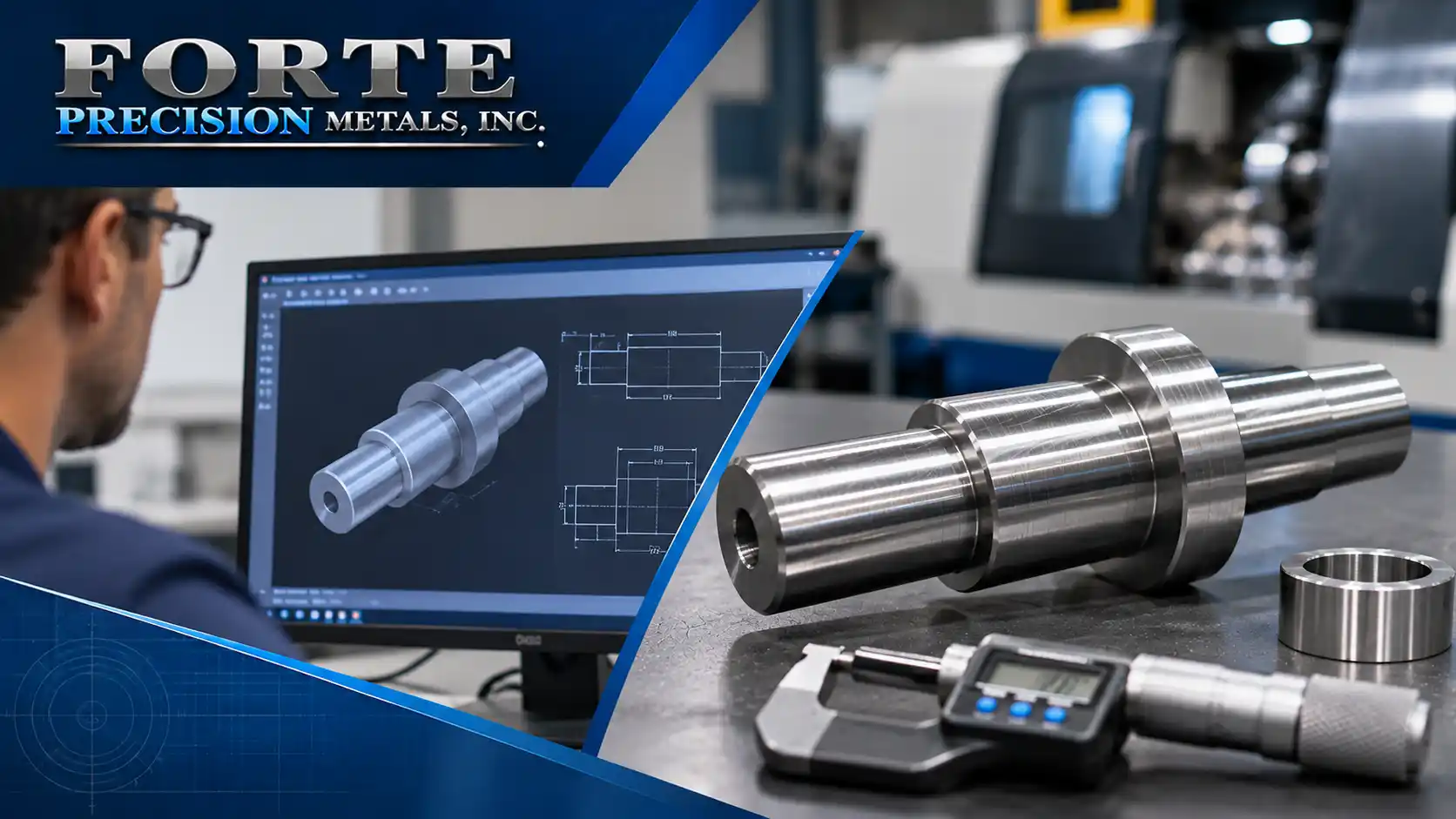
A part design is a set of decisions written down. The material, the diameters, the features, the finish, and the tolerances are all on the print, but none of it exists yet. Getting from that drawing to a component you can hold, measure, and install means choosing the right starting stock, then routing it through only the operations the design actually calls for.
For engineers and buyers in Franklin Park, IL, and across the Chicago area, here’s how our material processing and machining work can support the path from part design to physical component. Established in 1994, Forte Precision Metals, Inc. is an ISO 9001:2015 certified round bar supplier in Chicago, IL. Not every design needs every stage below, and the order depends on the part. Each stage, though, maps to work we do.
From Drawing to Finished Part: How a Customer Design Becomes a Physical Component
Every part begins with its own material, dimensions, and performance requirements. We use those details to understand which of our material and machining services are relevant to the design.
Starting With the Right Bar
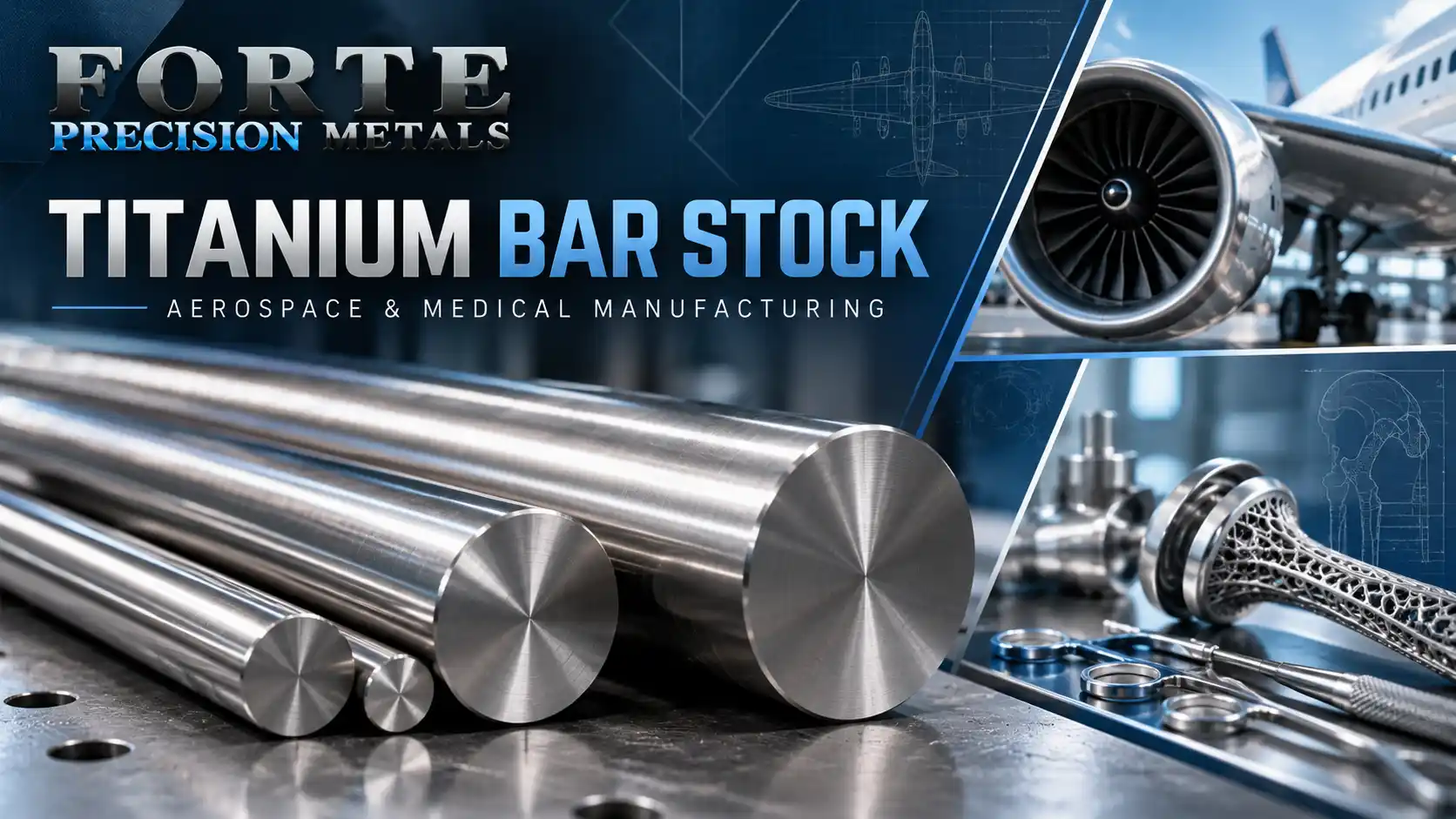
The first physical decision is the bar the part will come from. We supply precision ground and cold finish steel round bars and work with nine material families, including carbon steel, alloy steel, stainless steel, aluminum, titanium, tool steel, brass, copper and bronze, high temperature and nickel alloys, and medical and surgical metals.
The application usually narrows the field. A design for collets, gears, or axles may point toward 4142, a medium carbon, heat treatable alloy grade. Fasteners requiring high strength are a typical application for 8740, a nickel chromium low alloy steel. Aircraft bearings and other highly stressed parts are where 52100, a high carbon chromium steel, tends to appear. If the print specifies a grade, include that exact designation with your request. If it doesn’t, describe the part’s intended application and operating requirements so we have more context for discussing material options.
Getting the Bar Straight, Round, and to Length
Depending on the starting stock and the part’s requirements, straightening or grinding may be useful before machining begins. Our bar straightening uses rotary straightening machines on both ferrous and nonferrous bars, and pipe straightening is part of that service.
Centerless grinding, done in house, gives the bar accurate roundness and polish.
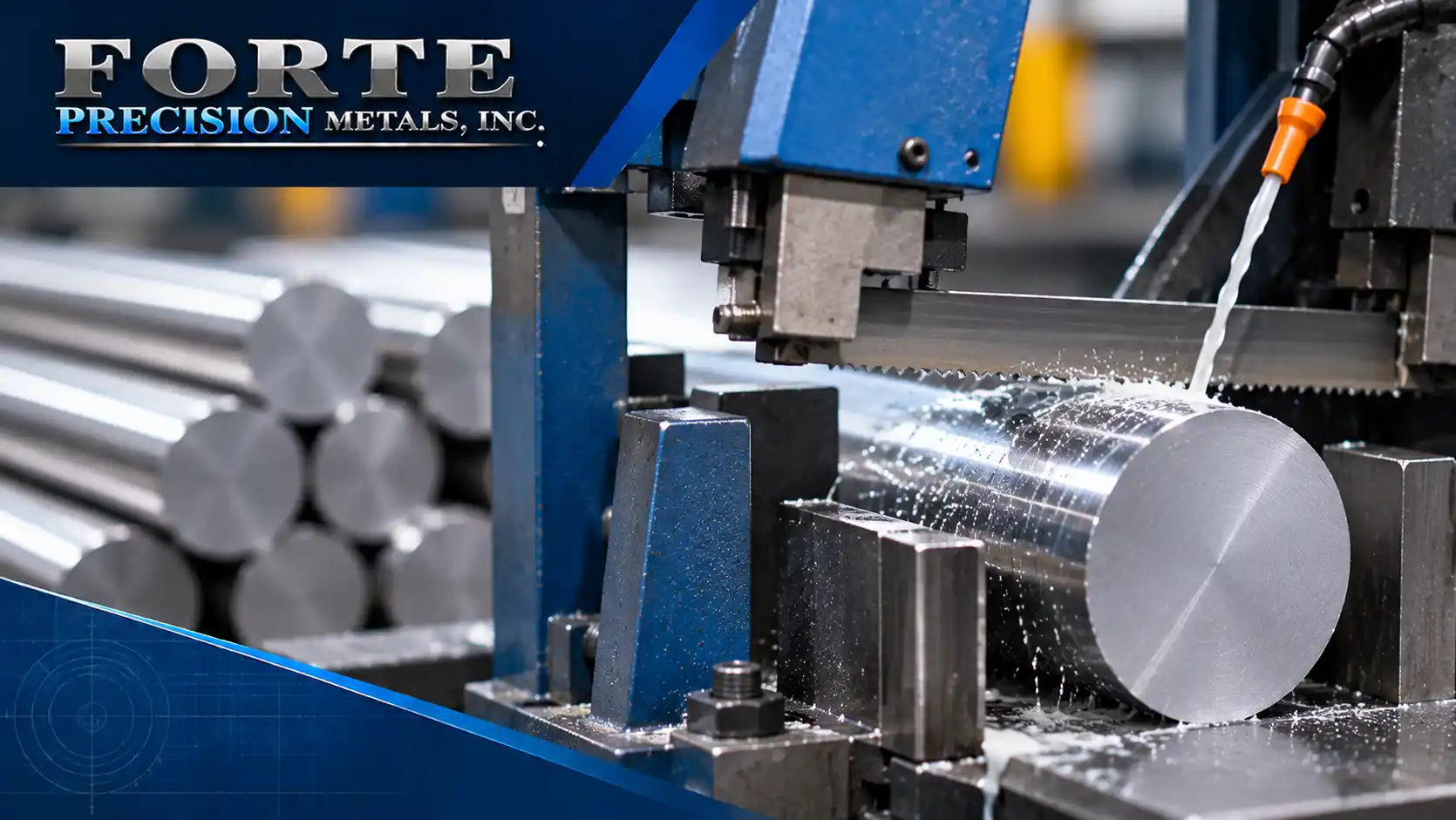
When a design requires shorter blanks, our CNC saws can cut stock to the specified length, whether the job involves individual bars or bundles.
Shaping the Features on the Drawing
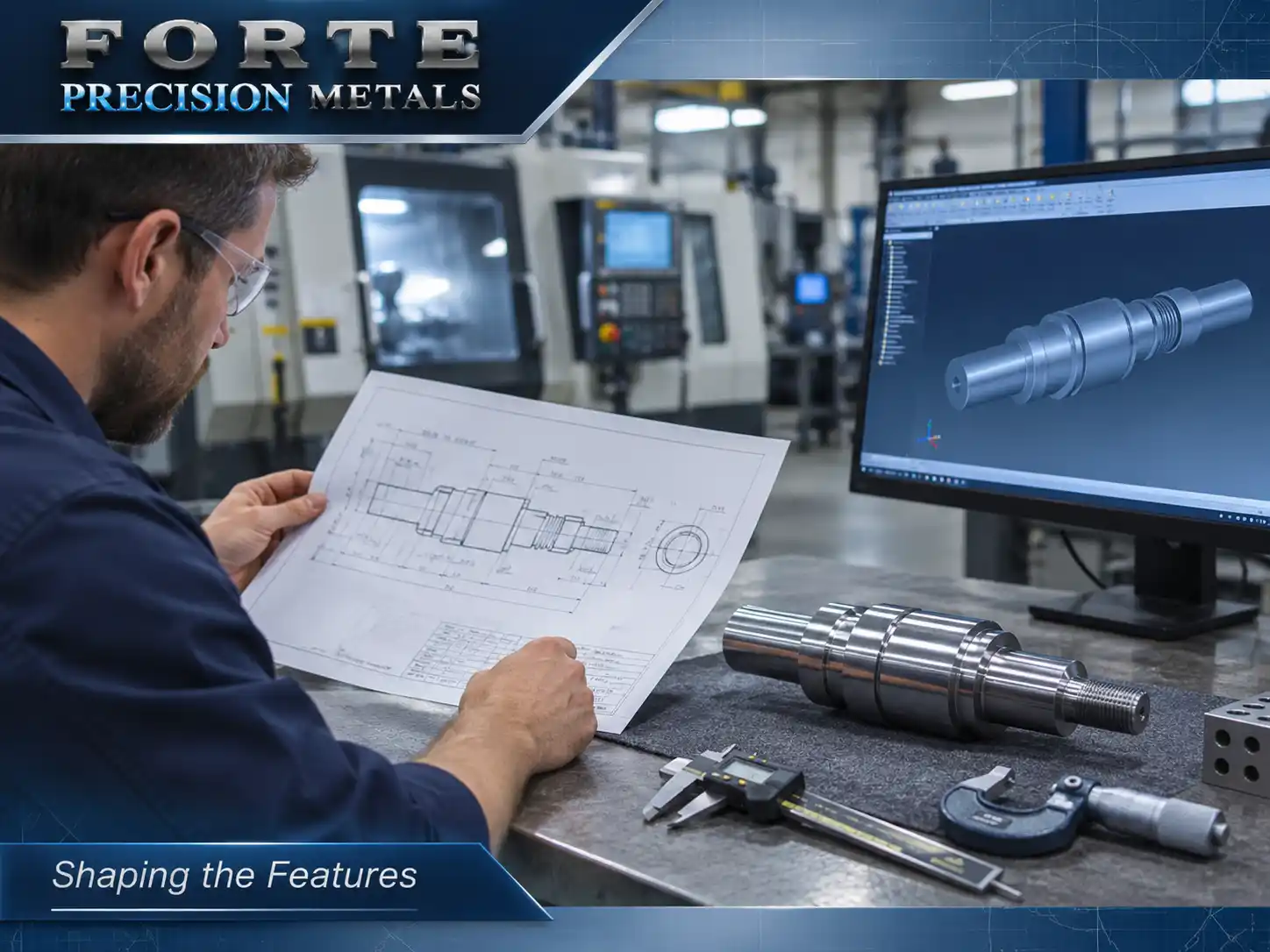
This is where the print starts to look like a part. Metal turning produces axis symmetric rotational components in stainless steel, alloy steel, carbon steel, aluminum, and copper, done to ±0.001 inch. Milling handles pockets, holes, slots, and 3D surface contours to the same tolerance.
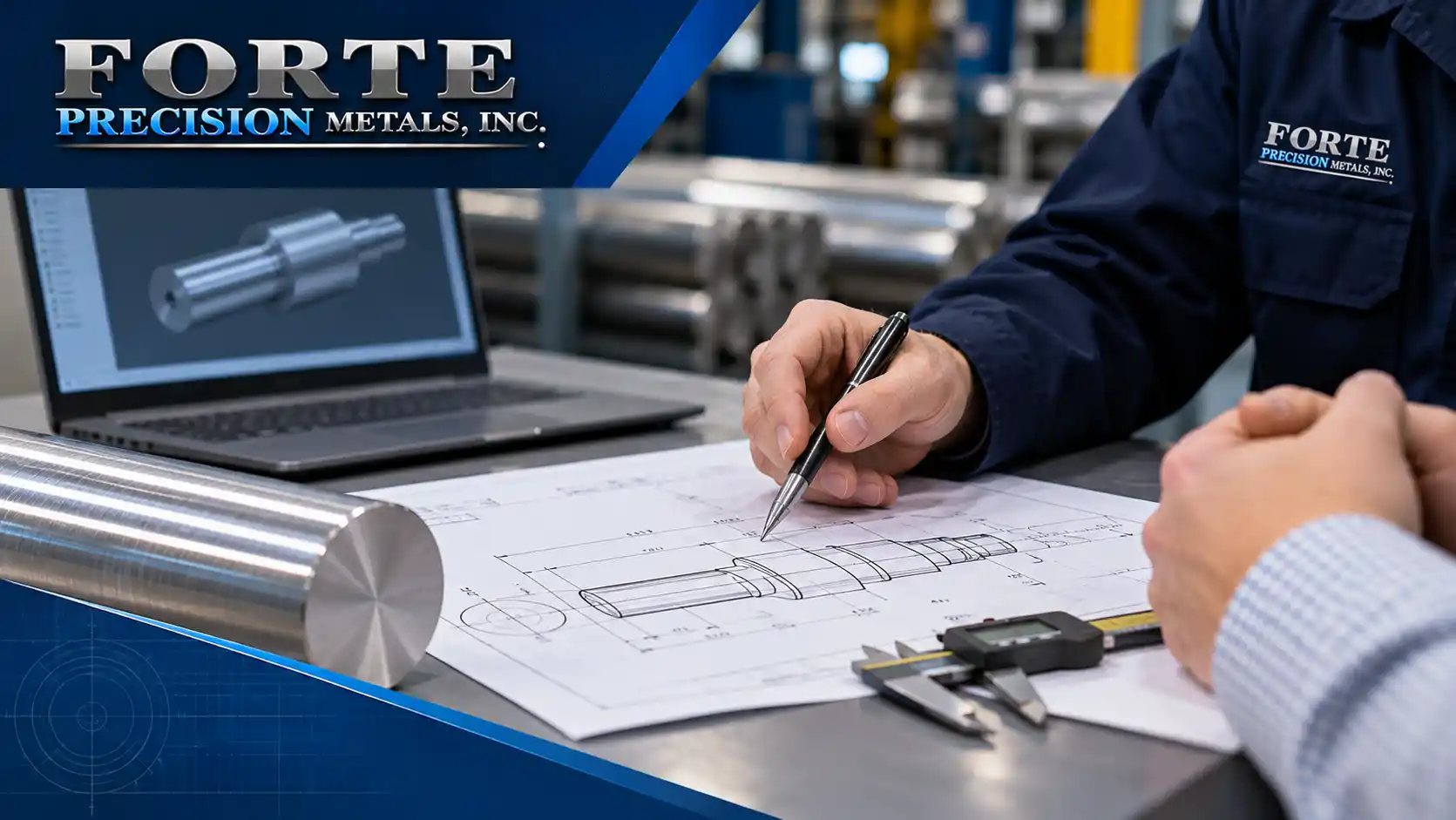
Designs that need more go through custom machining, which is CNC and CAD/CAM equipped and handles parts up to 10 inches in diameter and 8 feet long at ±0.005 inch. CAD/CAM ties machine programming to a part’s digital geometry, which matters when a design starts life in a CAD file rather than on paper.
Finishing the Edges and Surfaces
A freshly cut end is rarely the end the design intends. Bar chamfering creates close chamfered ends and removes burrs and sharp edges, with precise smoothing. A burr left on an end can get in the way of assembly or handling, so the chamfer callout on a print deserves as much attention as any diameter.
Surface finish comes next when the design specifies one. Our polishing can bring a surface to a specific roughness average, and custom stainless steel polishing is available as well.
Checking the Part Against the Design
A finished component needs to meet the specifications required for its intended use. Forte Precision Metals operates under an ISO 9001:2015 certified quality management system, with quality practices that include advanced quality planning, statistical process control, Gauge R&R, and machine capability studies. Each one ties the numbers on your print to measurements on real parts, which is the point of this final stage.
Packing the Finished Components for the Trip
A finished part still has to arrive the way it left. Material packaging options include cardboard tubing, paper wrapping, wooden boxes, wood crates, custom wood boxes, and UPS packages, and we ship nationally and worldwide. If your components need to stay separated or travel a long way, put that on the order.
Conclusion
The path from design to component runs through material selection, bar preparation, feature machining, finishing, verification, and packaging. Which of those stages your part needs depends on what’s on the print, and a clear drawing is what lets each stage land where the design intends.
If you have a part design you’d like us to review, send it through our request a quote form along with the material, dimensions, and quantity you have in mind. You can also call Forte Precision Metals at (847) 451-8888, Monday through Saturday from 7 AM to 5 PM. Once we see the print, we’ll map out which of these stages your part actually needs.
FAQs
Can one part combine turned and milled features?
Yes. Turning handles the rotational geometry of an axis symmetric part, and milling handles pockets, holes, slots, and 3D surface contours. A design that needs both draws on both services.
What if my drawing doesn’t name a material grade?
Tell us what the part does and what requirements it needs to meet. The intended application provides useful context when discussing material grades. For example, A2 tool steel is used for slitters and die shapes, while H13 is used for die casting and extrusion dies.
Can you put a mirror finish on a finished component?
Our polishing service includes a #8 mirror finish, along with finishing to a specific roughness average and custom stainless steel polishing. Call out the finish you need on the drawing so there’s no ambiguity.