A request that reads “4140 round bar, machined to print” leaves a lot unanswered. Which bar condition do you want? Which features carry the tight tolerances? How straight does the stock need to be, what should the ends look like, and how should finished parts be packed? Every open question is a place where a quote, or a part, can drift away from what you actually need.
If you’re an engineer, machinist, or buyer in Franklin Park, IL, or elsewhere in the Chicago area, this guide covers the details that can help you communicate your custom part requirements to our team. Forte Precision Metals, Inc. is an ISO 9001:2015 certified round bar supplier based in Chicago, IL, specializing in precision ground and cold finish steel round bars, centerless grinding, and a range of value added services. Each section below ties back to work we actually do with your material.
What to Include When You Send Custom Part Requirements to a Metal Supplier
A clear request gives us the information we need to understand your material and machining requirements. Before requesting a quote, organize your specifications around the grade, dimensions, tolerances, finishing, and delivery needs.
Name the Full Grade, Not Just the Metal
“Stainless” or “alloy” is a starting point, not a specification. We work with nine material families, including stainless steel, carbon steel, alloy steel, aluminum, brass, copper and bronze, medical and surgical metals, high temperature and nickel alloys, titanium, and tool steel. Identifying the correct material family is the first step, but the exact grade matters just as much. Inside each family, a small difference in a grade designation can point to a different material.
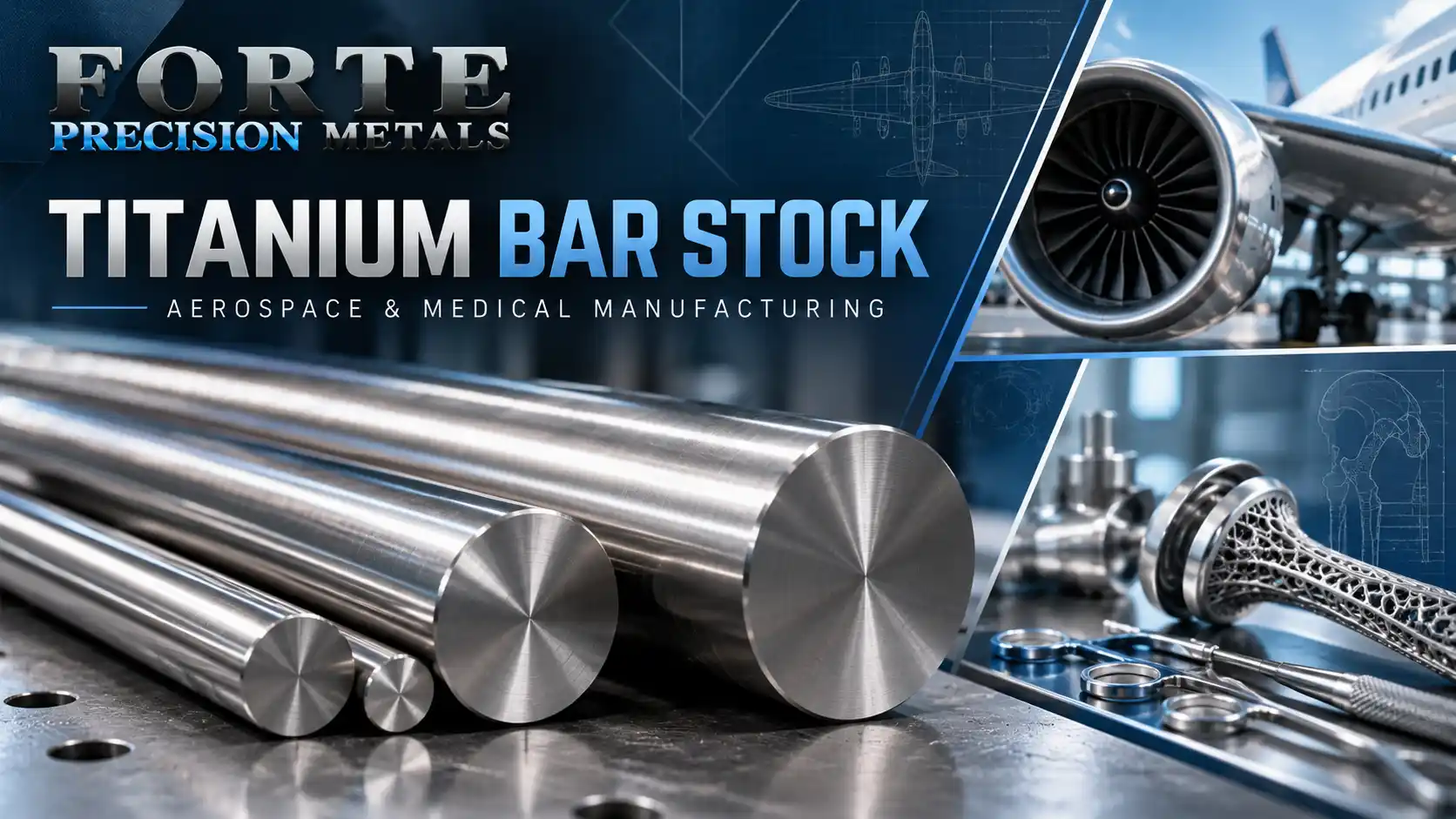
Titanium is a good example. Grade 5 (6Al-4V) and Grade 23 (6Al-4V ELI) have similar alloy designations, but Grade 23 has lower oxygen content and better fracture toughness. Both show up in aerospace and medical work, which makes the ELI suffix easy to drop and important to keep. The same care applies to stainless pairs such as 420 and 420F, or 430 and 430F, which are separate grades in our stainless lineup. Copy the designation exactly as it appears on your drawing or material spec.
Put the bar condition on the same line. Precision ground bar and cold finish bar are different products, so tell us which one your part starts from.
Separate Critical Tolerances From General Ones
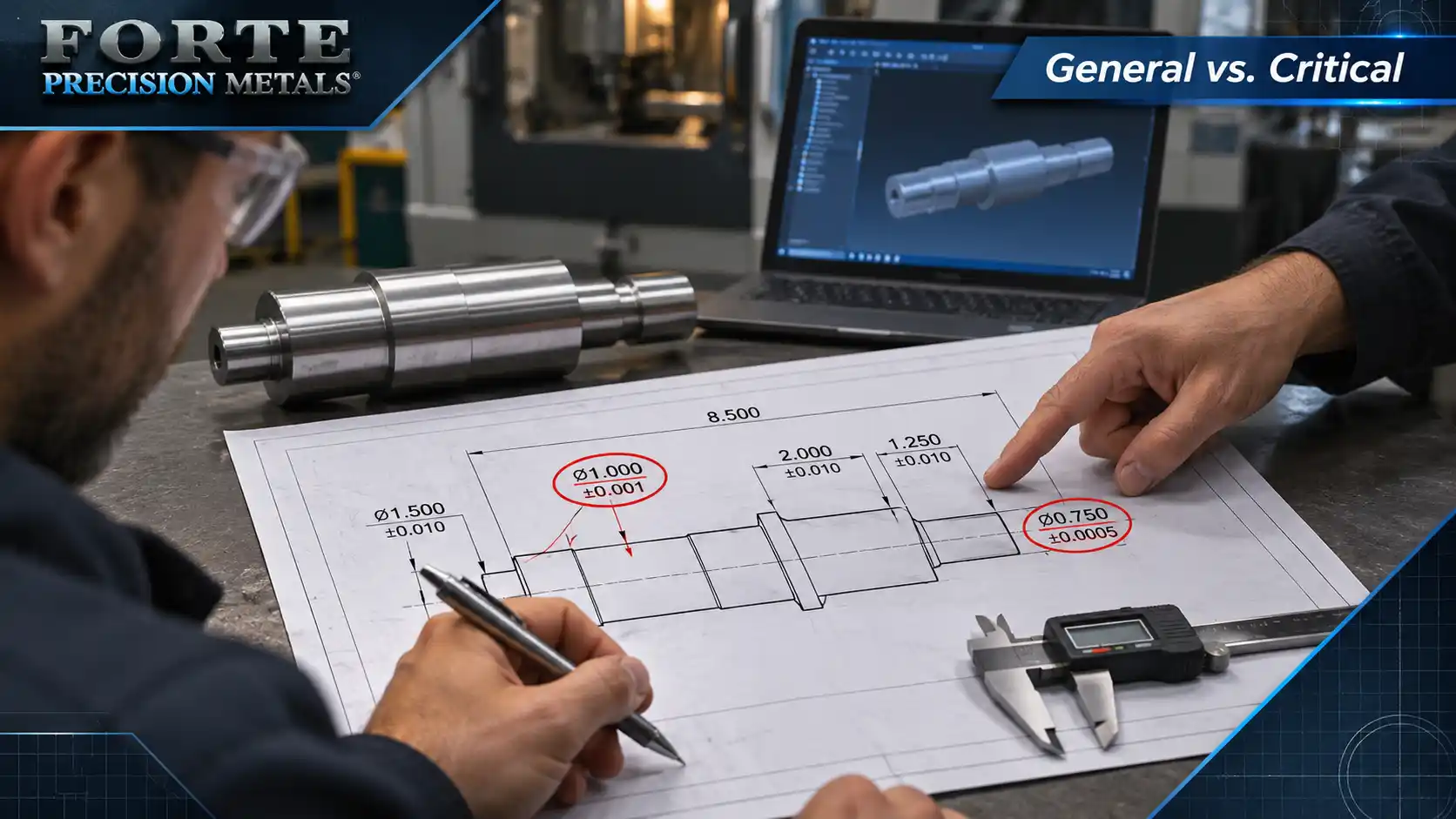
When every dimension on a drawing carries the same tight tolerance, it’s hard to tell which features truly control fit and function. A clearer approach is a general tolerance block for noncritical dimensions, with the dimensions that matter called out individually.
It also helps to know where our processes sit. Metal turning and milling are done to ±0.001 inch, and custom machining to ±0.005 inch. Put your required tolerances on the drawing, and if any fall outside those numbers, say so up front so we can talk it through before quoting.
Flagging critical features makes it easier to communicate which dimensions matter most for the part’s intended function. Clearly identifying critical dimensions also gives us a better starting point for quality planning. Quality practices at Forte Precision Metals include statistical process control, Gauge R&R, and machine capability studies.
Describe Machined Features by Their Geometry
Different features come from different operations, so naming the geometry helps route your part. Metal turning produces axis symmetric rotational components, and we turn stainless, alloy, carbon, aluminum, and copper. Milling handles pockets, holes, slots, and 3D surface contours. When one part needs both, a print that shows each feature clearly saves a round of questions.
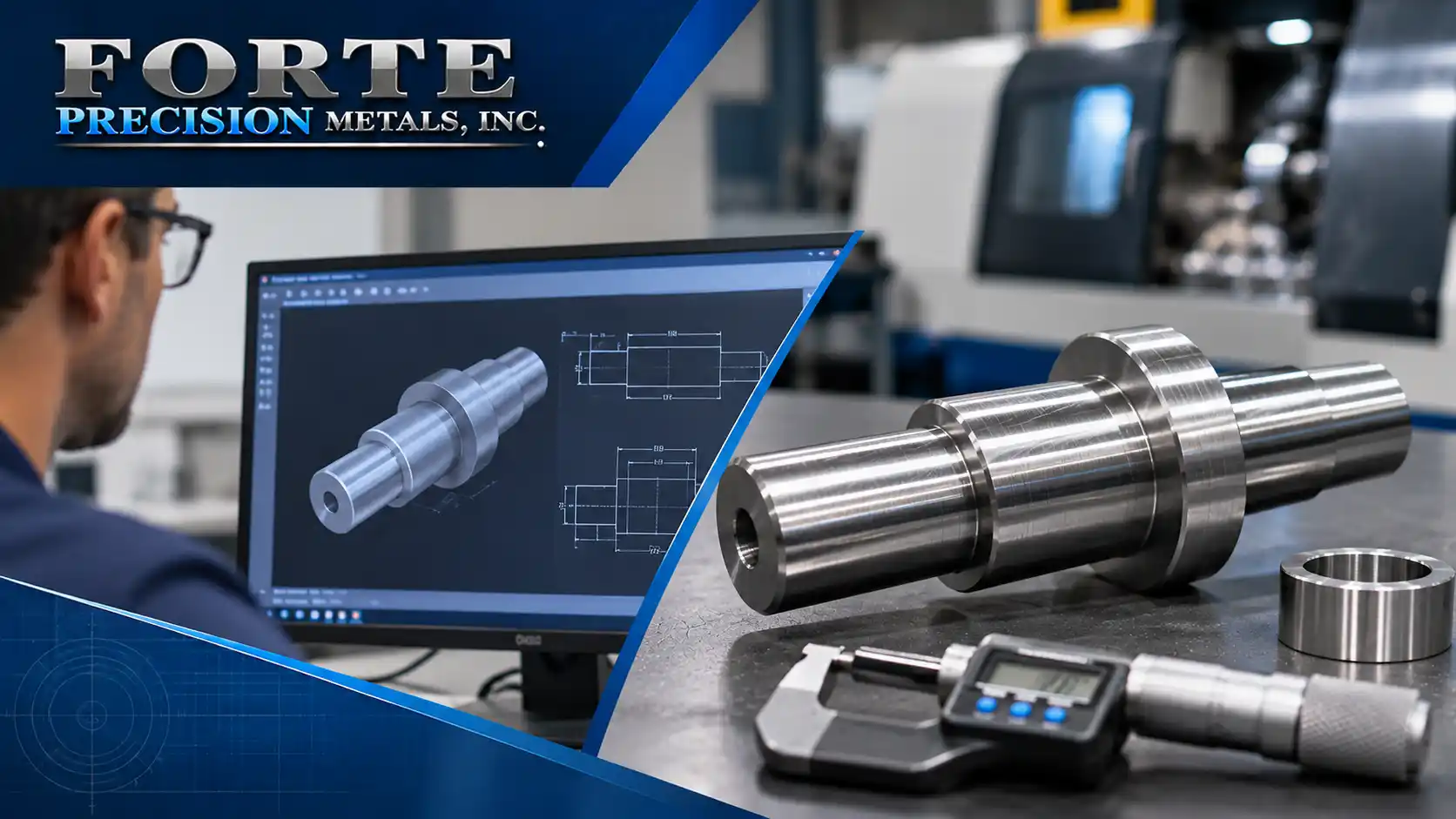
Custom machining handles parts up to 10 inches in diameter and 8 feet in length. Send a fully dimensioned drawing with your request, and mention whether a CAD model is available.
Spell Out Straightness, Length, and End Condition
These three details are easy to leave off because they seem obvious to the person who designed the part. They aren’t obvious to anyone else.
Straightness is worth stating on any long or rotating part. We use rotary straightening machines on both ferrous and nonferrous bars, and pipe straightening is part of that service. Give your requirement as a measurable value over a stated length rather than simply writing “straight.” If the part starts from ground bar, include the finished diameter you need. Our centerless grinding is done in house and produces accurate roundness and polish.
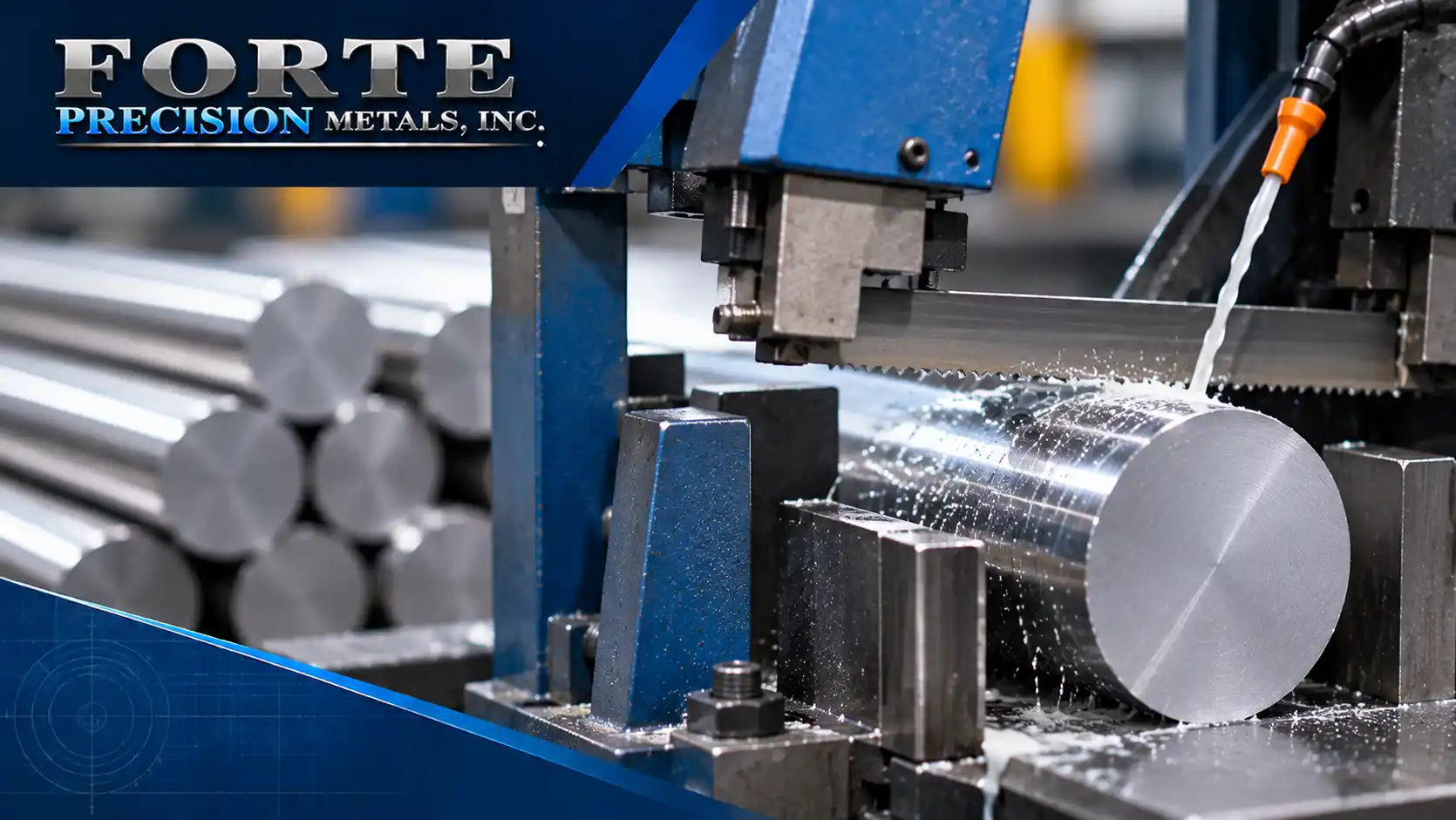
Length and ends come next. Our saw cutting uses CNC saws for cutting bars to specified lengths, in singles or bundles, so list the exact cut length, the piece count, and whether pieces should be bundled. If the ends need a chamfer, put the size and angle on the print. Bar chamfering gives close chamfered ends and removes burrs and sharp edges.
Put a Number on Surface Finish
“Smooth” and “bright” mean different things to different shops. Polishing can be done to a specific roughness average, and #8 mirror finish and custom stainless steel polishing are also available. If you have a target roughness average, put the Ra value on the drawing. If you want a #8 mirror finish, identify that finish explicitly and include any additional surface requirements that matter to your application.
Tell Us Where the Part Is Going and How It Should Arrive
A short note about the application gives useful context. We serve customers across aerospace, automotive, construction, medical, military, oil and gas, and food processing industries. Knowing the end use helps us read the grade, finish, and handling you’ve specified. You don’t need to share anything proprietary. “Pump shaft” or “surgical instrument blank” is often enough.
Packaging deserves a line too. If parts need to stay separated, arrive crated, or travel a long distance, write that into the request so the packaging matches the trip.
Conclusion
A strong custom part request answers questions before anyone has to ask them: full grade designation, bar condition, critical tolerances, feature geometry, straightness, cut length, end condition, surface finish, application, and packaging. Pull those details into one package and your request reads like a specification instead of a starting point.
When you’re ready, send your drawing and requirements to Forte Precision Metals through our request a quote form, or call our team at (847) 451-8888, Monday through Saturday from 7 AM to 5 PM. If a print is sitting on your desk waiting for a quote, that’s the place to start, and we’ll walk through the details with you.
FAQs
Should I send a drawing or a written description of my custom part?
A dimensioned drawing is the clearest option, with critical dimensions and tolerances marked individually. Our custom machining is CNC and CAD/CAM equipped. A written note works best alongside the print, covering grade, bar condition, quantity, and packaging needs.
What bar size can go through centerless grinding?
We centerless grind in house up to 7 inches in diameter and up to 24 feet in length. Include both the finished diameter and the full length on your request so we can confirm the job fits.
Can you turn materials other than steel?
Yes. Our metal turning covers stainless, alloy, and carbon steel, along with aluminum and copper. Our bar straightening service also handles both ferrous and nonferrous bars.
How should I specify packaging for parts shipping out of state or overseas?
Tell us the destination and any handling requirements. We ship nationally and worldwide, and packaging options include cardboard tubing, paper wrapping, wooden boxes, wood crates, custom wood boxes, and UPS packages.