If a purchase order lands with a grade like 4140 or 316L, that number is a compressed specification. Read it right, and you already know the alloy family, carbon level, and likely application. Miss it, and you risk ordering the wrong bar entirely.
We work with engineers and buyers every day at our chicago facility. The questions we hear most often come back to one thing. What does this grade actually tell me, and does it fit my application?
What Every Grade Number Is Actually Telling You
Steel grade numbers are not product codes. Each digit or letter carries real information about alloy content, carbon level, hardening method, and intended use. Once you understand the system, you can screen most specifications yourself before you ever call a supplier.
The system varies by material family. Carbon and alloy steels follow the AISI/SAE four-digit format. Stainless grades use series numbers. Tool steels lead with a letter. Titanium splits into commercially pure and alloy groups. Each one follows its own logic, and knowing that logic saves time on both ends of the transaction.
Carbon and Alloy Steel: The Four-Digit System
The first two digits in a carbon or alloy steel grade identify the alloy family. The last two indicate nominal carbon content in hundredths of a percent. Grade 4140 means chromium-molybdenum family with roughly 0.40% carbon, giving you a bar built for hardness penetration and wear resistance in highly stressed parts.
Drop to 4130, and you stay in the same family but with less carbon. That makes the bar more machinable, weldable, and ductile, which is why 4130 covers aircraft components, automotive parts, and hydraulic tools. When you see an “L” in a designation like 12L14 or 41L40, that modifier affects how the bar responds to machining. That letter matters if your process involves heavy turning or screw machine work.
Stainless Steel: Series Numbers and What They Signal
The 300 series stainless grades are austenitic and non-magnetic. Their corrosion resistance starts with a minimum of 12% chromium. Grade 304 handles complex forms and food processing. Grade 316 adds molybdenum for the best corrosion resistance in the family, which is why pharmaceutical, marine, and medical applications specify it directly.
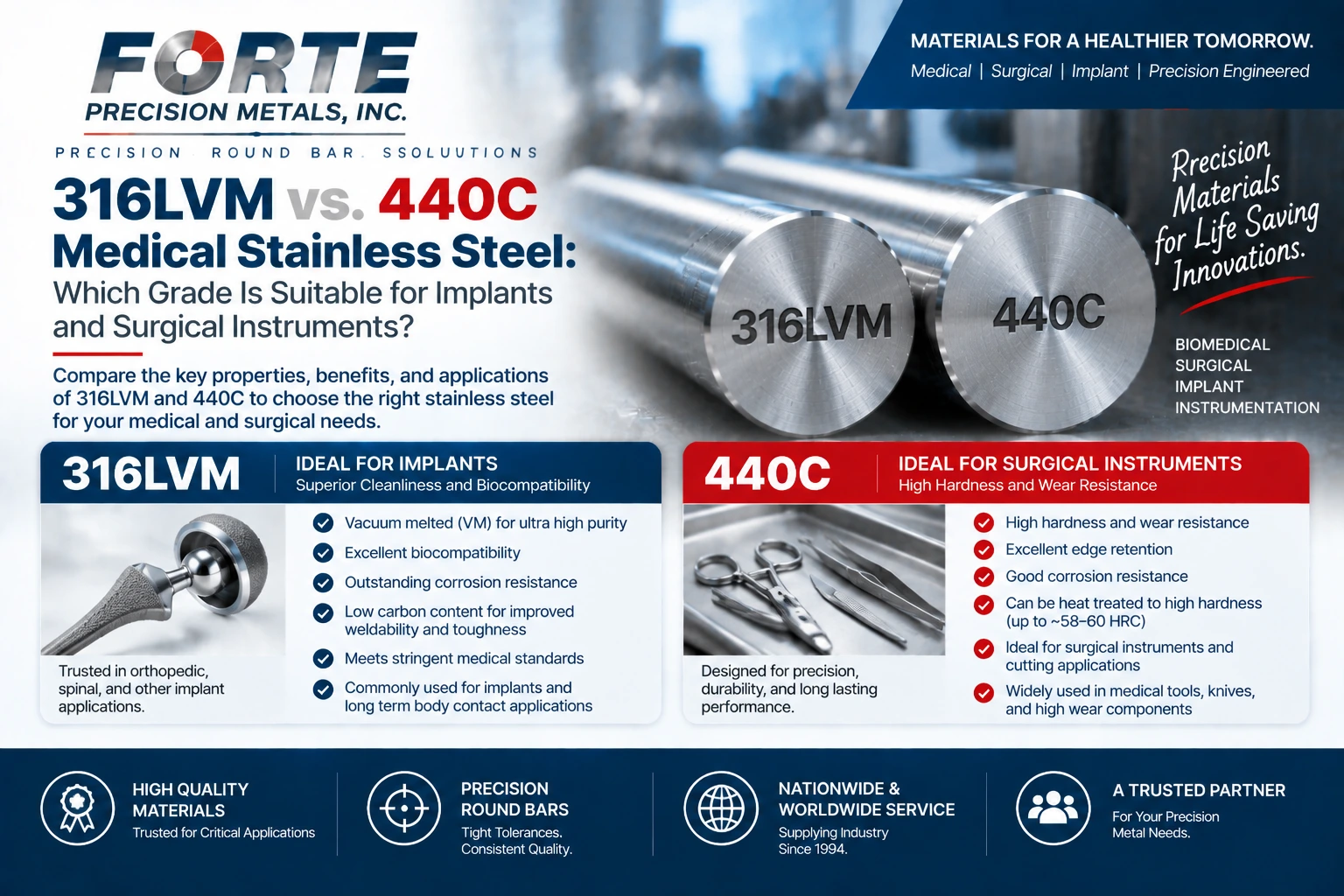
The 400 series grades are magnetic. Grade 410 is widely used in nuts, bolts, and bushings. Grade 420 carries more carbon and is harder, making it in cutlery and surgical instruments. Grade 440C delivers the greatest strength in the 440 family for knifemaking. Grade 446 is the most oxidation-resistant, used in boiler parts, burners, and injector nozzles.
Tool Steel: Reading the Letter Prefix
The letter prefix on a tool steel grade tells you the hardening method and working environment. D grades are high chromium, high carbon, deep hardening types. H grades handle hot work applications. M grades are molybdenum high-speed steels. W grades are water hardening. Tool steels generally carry between 0.5 and 1.5% carbon across the family.
D2 is built for blanking and forming dies. H13 resists softening at elevated temperatures, handling die casting and extrusion work. M2 offers better wear resistance than M1, making it a standard for cutting tools. W1 is a simple high-carbon grade covering metal cutting tools, cutlery, and reamers.
Titanium: CP Grades vs. Alloy Grades
Commercially pure titanium runs from Grade 1 through Grade 4. Grade 1 is the softest with the highest ductility, used in automotive, medical, and marine applications. Grade 4 is the strongest commercially pure option, used in chemical, medical, and aerospace services.
Grade 5, designated 6Al-4V, is the strongest commercially available titanium and covers the widest range of aerospace, medical, and marine work. Grade 23, also called 6Al-4V ELI, is a refined version with better fracture toughness and lower oxygen content, making it the preferred choice for aerospace and medical implants.
Precision Ground vs. Cold Finish: The Condition Matters Too
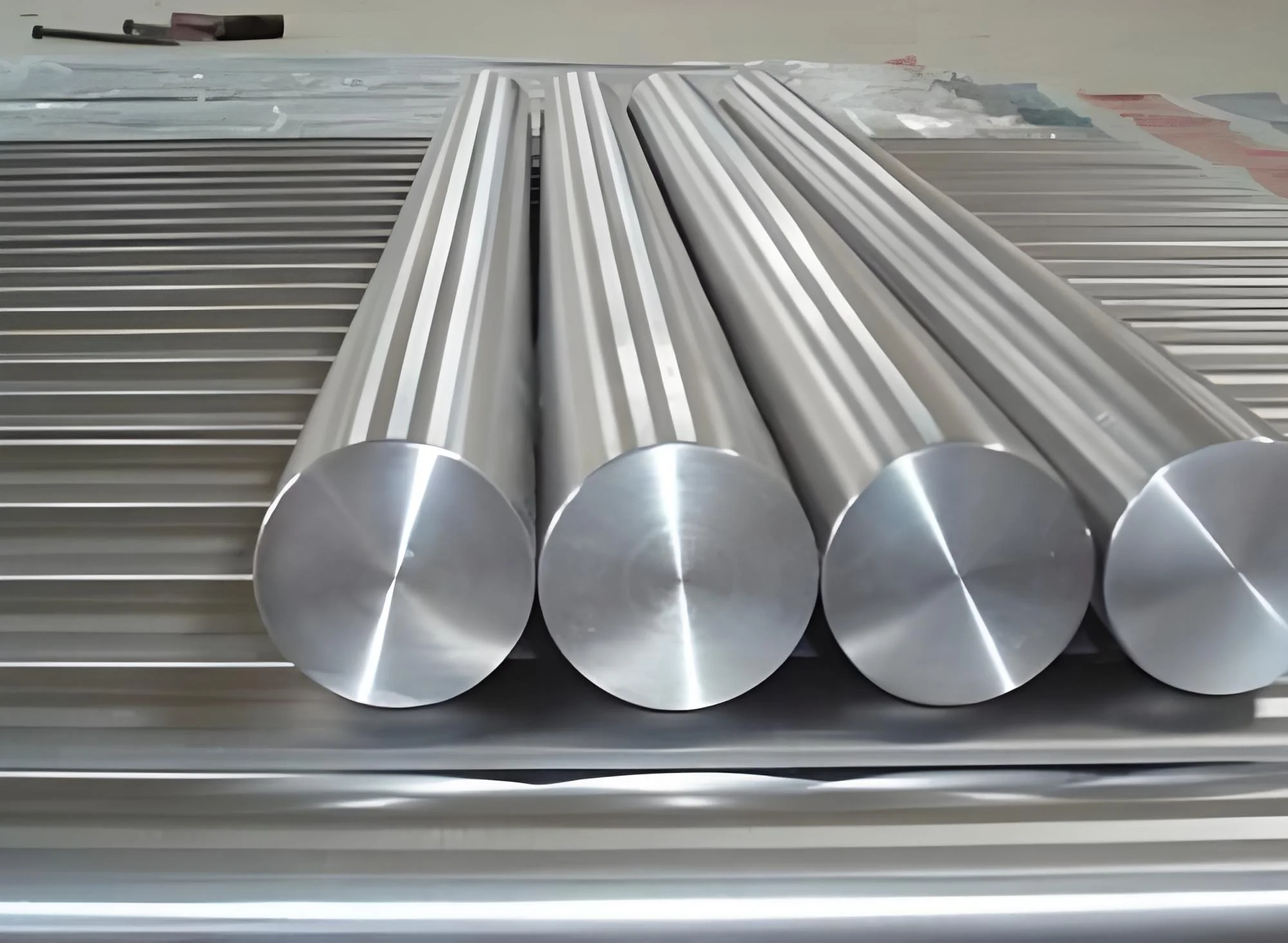
Cold finish bar is drawn or turned to closer tolerances than hot-rolled material. It works well as a starting point for most applications. Precision ground bar has been centerless ground for accurate roundness, tight dimensional control, and a smoother surface finish throughout.
Our centerless grinding handles bars up to 7 inches in diameter and up to 24 feet in length. If your drawing calls out a tight diameter tolerance or a specific surface finish, precision ground is the right call. If the bar will see further machining downstream, cold finish is often the more practical choice.
Get the Right Bar for Your Application
Bring your grade, finish condition, diameter, length, and end use, and we can move fast. Our team in Franklin Park is available Monday through Saturday, 7 AM to 5 PM. We have been ISO 9001:2015 certified since 1994 and ship nationally and worldwide.
Call us at (847) 451-8888 or submit your specification through the request a quote form at fortemetals.com. If the grade is unclear or you are weighing options across our nine material families, we are glad to help you work through it.
FAQs
Q: What is the difference between 4140 and 4142 steel?
Both are chromium-molybdenum alloy steels. Grade 4140 suits highly stressed parts. Grade 4142 is heat treatable, used in die holders, gears, and collets.
Q: Do the magnetic properties of stainless steel matter for my application?
Yes. Austenitic grades like 304 and 316 are non-magnetic. Martensitic and ferritic grades like 410 and 440C are magnetic. Check your application requirements.
Q: When should I specify precision ground over cold finish?
Specify precision ground when your drawing requires a tight diameter tolerance or a specific surface finish. Our grinding runs up to 7 inches in diameter and 24 feet in length.
Q: What if my grade is not on your product pages?
Call (847) 451-8888 or use the request a quote form. We stock nine material families and can advise on availability for your specification.