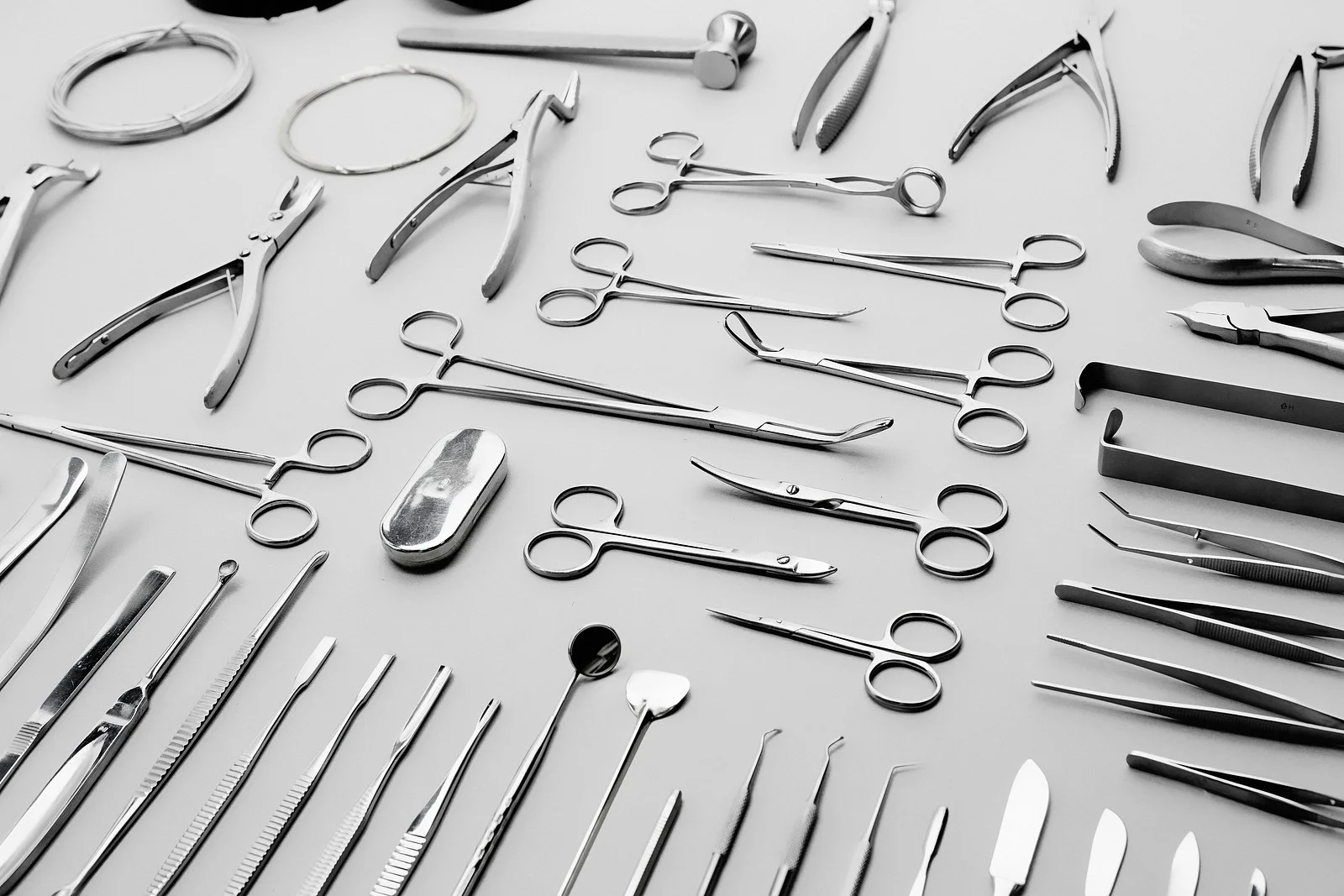
Picking the wrong stainless grade for a medical part costs more than a rejected order. It can mean a component that corrodes, loses hardness, or fails biocompatibility before production even starts. We’ve supplied surgical and medical-grade stainless bar since 1994, and as an ISO 9001:2015 certified supplier, grade selection is always where we begin.
Every application tells you which grade it needs. The sections below break that down clearly so you can spec with confidence and order without second-guessing.
Stainless Steel Grades That Work in Medical and Surgical Settings
Medical and surgical applications demand more from a stainless grade than most industrial uses. Corrosion resistance, surface finish quality, hardness, and biocompatibility all have to work together in the same bar. Getting one right while missing another means the part fails before it reaches the end user.
The grades we carry for this category cover both implant and instrument needs. Each one serves a specific function, and understanding those differences saves time at every stage from design to procurement to final inspection.
Grade 316 and 316/316L: Built for Implant Contact
Grade 316 is non-magnetic, austenitic, and carries added molybdenum. That molybdenum is what gives it the best corrosion resistance in our stainless lineup, especially in environments involving body fluids. Most implant specifications land here for good reason.
Grade 316/316L is the extra low carbon version of that same family. Lower carbon content prevents carbide precipitation when a component goes through welding or thermal processing after machining. Both grades are stocked and verified for pharmaceutical, marine, and medical applications.
Grade 316LVM: Cleaner Bar for Long-Term Implants
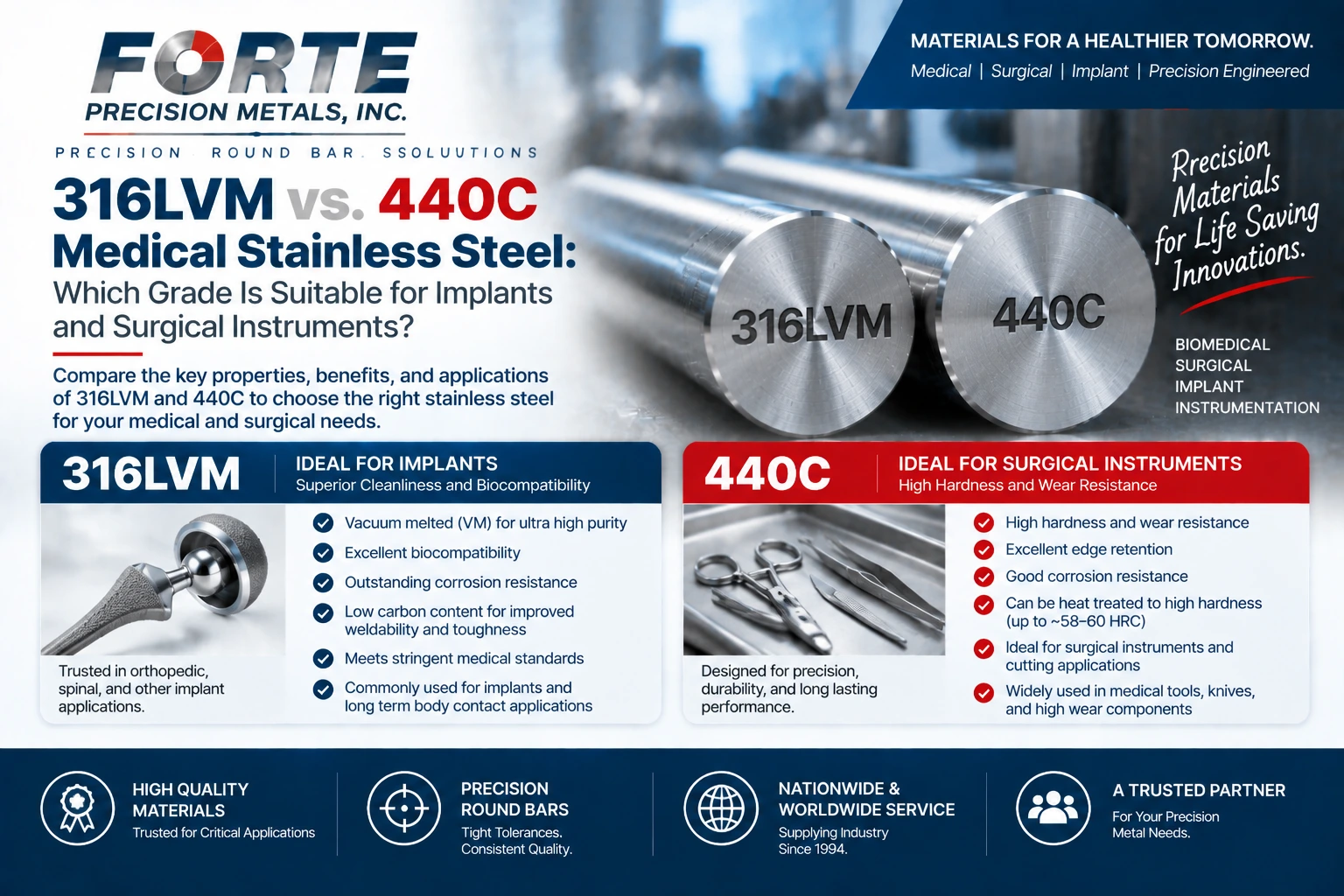
316LVM is a specialized grade within the 316 family and sits apart from standard 316L for implantable device work. We stock it specifically for buyers in orthopedic, spinal, and cardiovascular component manufacturing, where the material specification demands the cleanest possible bar stock.
If your application involves long-term body contact, this is the grade your spec most likely calls for. Visit our 316LVM product page for full details, and confirm your drawing requirements before ordering.
Grade 420: Hardness for Cutting Instruments
Scalpels, scissors, and reusable clamps need edge retention, not just corrosion resistance. Grade 420 is martensitic and magnetic, with higher carbon content than 410. That carbon produces the hardness that cutting instrument manufacturers depend on.
We list 420 for surgical instruments, and it responds well to precision grinding and polishing. If your instruments get sharpened and sterilized repeatedly, 420 gives you a starting bar that holds its geometry through the process.
Grade 440C: Maximum Hardness in the 440 Family
440C carries the greatest strength of any grade in the 440 series. It is magnetic and ferritic/martensitic, and it suits instruments that need to hold tight geometry under heavy, repeated use without losing dimensional integrity.
It behaves differently in sterilization environments compared to austenitic grades, so confirm your sterilization method with your design team before finalizing the spec. For hardness-driven instrument applications, 440C is a reliable and proven option.
Grade 455: A Specialized Stainless Option
Grade 455 is a stainless round bar we stock for buyers working with demanding medical specifications. It sits outside the standard austenitic and martensitic families, making it a more specialized selection than 420 or 440C.
For full grade details, we recommend visiting our 455 stainless product page or speaking with your metallurgist before placing an order. This grade serves a narrower range of use cases, and the right application fit matters.
Finishing and Grinding Services for Medical Bar Stock
Getting the bar to the right surface condition before it reaches your shop saves time and reduces scrap. Our in-house centerless grinding handles bars up to 7 inches in diameter and up to 24 feet in length, producing accurate roundness and consistent surface polish.
For customers who need a specific roughness average, a number 8 mirror finish, or custom stainless polishing, our polishing service covers that. We also offer electroplating, metal turning to a tolerance of plus or minus 0.001 inches, milling to the same tolerance, and CNC saw cutting for singles and bundles.
Get the Right Medical Grade Stainless Bar for Your Application
If you know your grade, our team can confirm availability, discuss finishing options, and get your order moving. If you’re still working through the spec, reach us Monday through Saturday, 7 AM to 5 PM, at (847) 451-8888. We work with engineers and procurement teams at every stage of a program, from early material selection through final order.
Submit your requirements through the request a quote form at fortemetals.com/request-a-quote/, and we’ll respond with what you need. We supply customers nationally and worldwide from our facility at 9234 Parklane Ave, Franklin Park, IL 60131.
FAQs
What medical-grade stainless bars does Forte Precision Metals carry?
We stock 316, 316/316L, 316LVM, 420, 440C, and 455 stainless round bar for surgical and implant applications.
What separates 316L from 316LVM?
316LVM is a specialized grade within the 316 family designed for implantable device work. Visit the product page for full details.
Can you grind or polish a stainless bar to a medical surface finish?
Yes. We grind up to 7 inches in diameter and 24 feet in length. Polishing options include a number 8 mirror finish and electroplating.
Do you ship medical-grade stainless steel outside Illinois?
We supply customers nationally and worldwide from our facility in Franklin Park, IL.