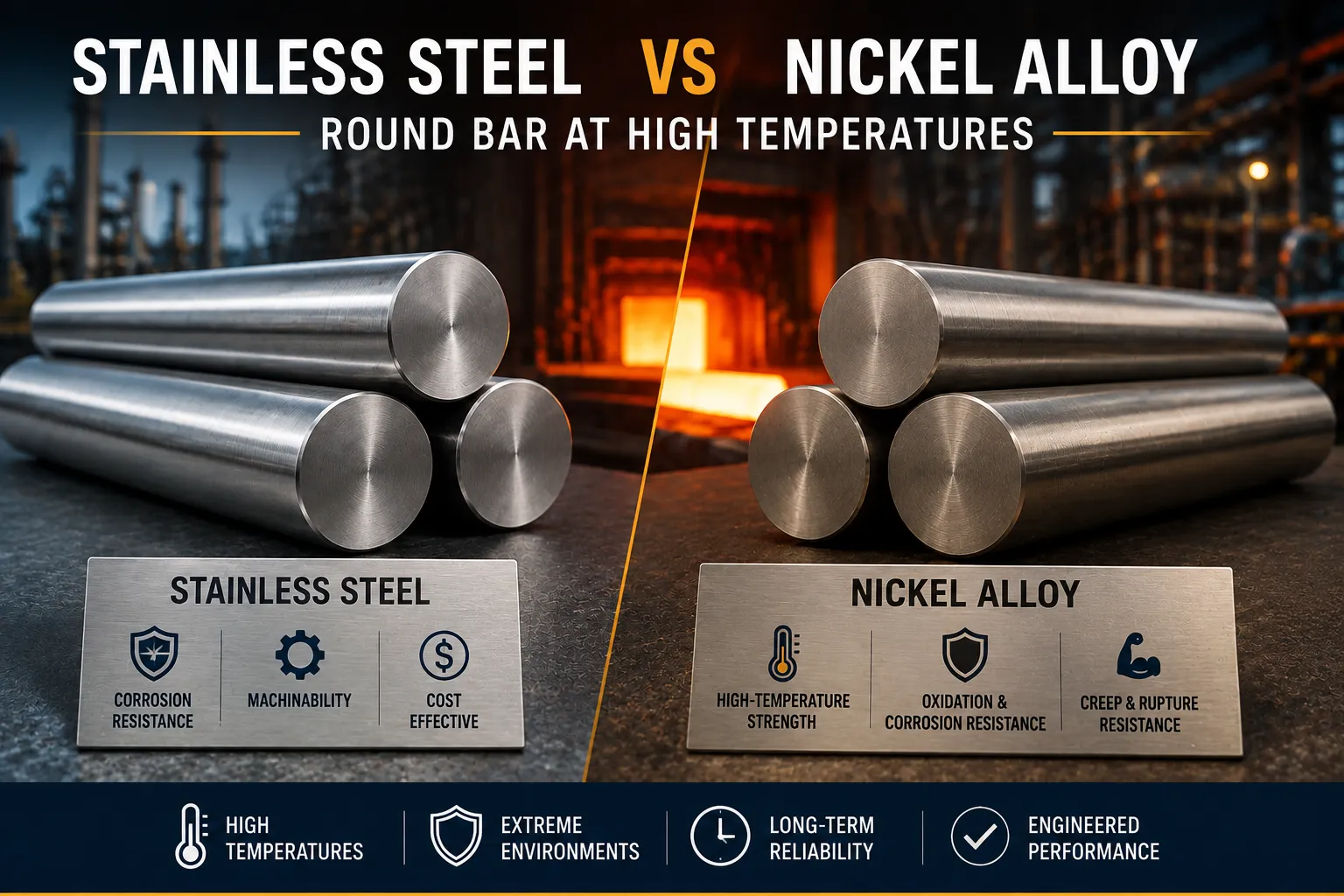
The stainless steel vs nickel alloy round bar comparison becomes especially important in sustained, load-bearing, high-temperature service. Nickel alloy round bar generally performs better than common stainless steel because suitable nickel alloys retain more strength, resist creep, and tolerate oxidation or hot corrosion across demanding temperature ranges. However, stainless steel is often the more economical choice when the specified grade can reliably meet the required temperature, load, atmosphere, and service-life conditions. Forte Precision Metals supplies both material families.
What Determines Round Bar Performance at High Temperatures?
A maximum temperature rating does not fully describe material performance. Engineers must evaluate strength retention, creep, oxidation, thermal cycling, and environmental attack together. A bar may resist scaling yet deform slowly under a constant load.
Creep is a time-dependent deformation under sustained stress. The design must use elevated-temperature tensile, creep, and rupture data for the named alloy, product form, heat treatment, diameter, and specification.
Where Does Stainless Steel Round Bar Perform Well?
Stainless steel works well in moderate-temperature equipment when corrosion resistance, machinability, and cost matter alongside heat resistance. Forte offers stainless steel round bar in multiple grades and processed conditions.
How Do Common and Stabilized Stainless Grades Differ?
Common 304 and 316 grades provide useful oxidation resistance, but their strength falls as temperature rises. Stabilized 321 and 347 help resist sensitization during elevated-temperature exposure. Long exposure, cycling, weld condition, stress, and atmosphere can still change the allowable service window.
Why Do Nickel Alloys Usually Lead Under Sustained Heat and Load?
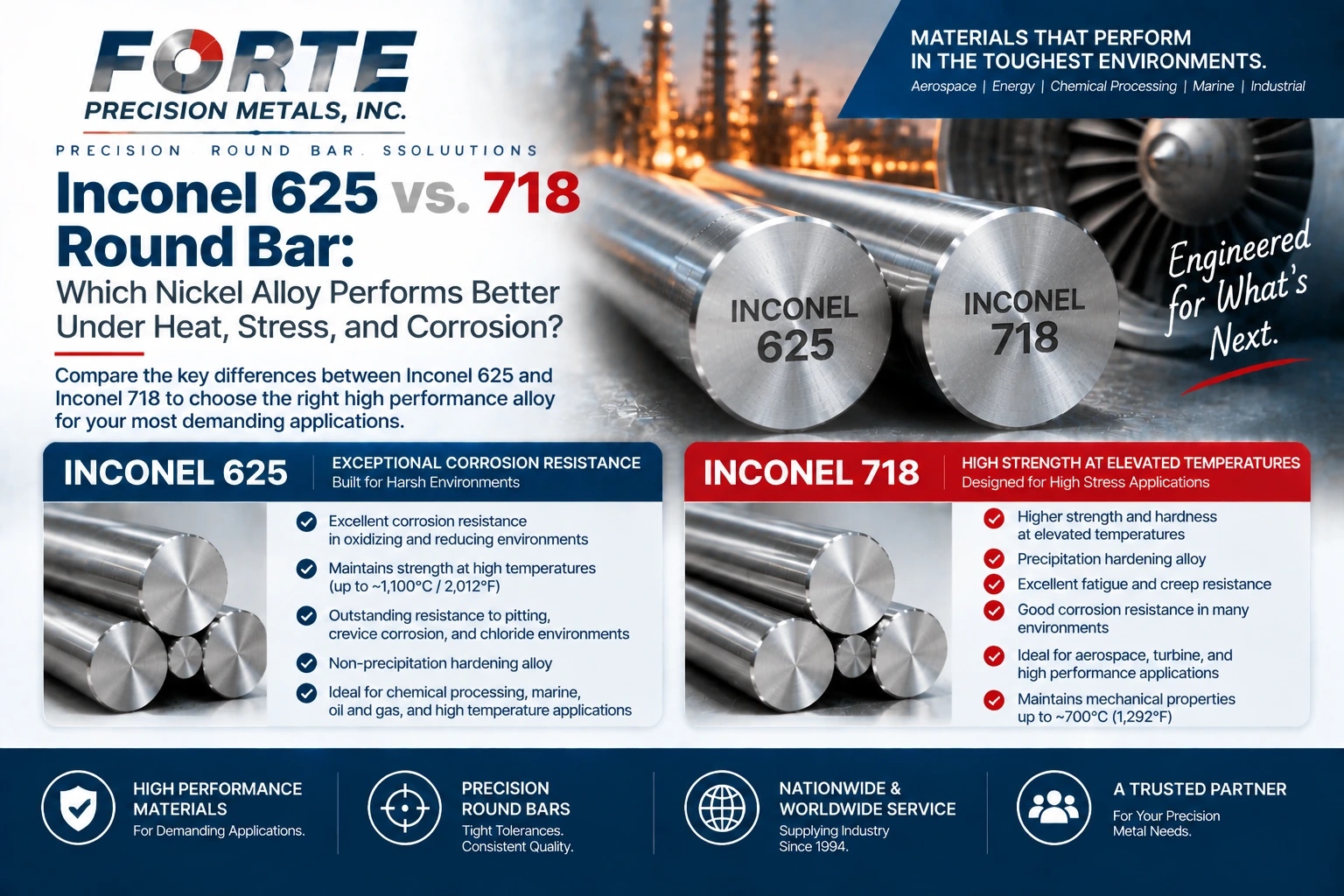
Nickel-based alloys are engineered to preserve useful mechanical properties at elevated temperatures. Chromium supports oxidation resistance; other additions can improve corrosion resistance or high-temperature strength.
Forte’s nickel and high-temperature alloy range supports demanding aerospace, energy, chemical-processing, and industrial applications where heat and corrosion act together.
Does Nickel Content Automatically Guarantee Better Performance?
No. Performance depends on chemistry, heat treatment, stress, atmosphere, and exposure time. Oxidizing gas, carburizing conditions, chlorides, acids, sulfur, and pressure service can require different grades. The drawing should name the UNS or alloy designation, specification, condition, tests, and temperature range.
Stainless Steel vs Nickel Alloy: Practical High-Temperature Comparison
| Performance factor | Stainless steel round bar | Nickel alloy round bar |
|---|---|---|
| Strength retention | Adequate in many moderate-temperature duties; common grades lose strength as heat rises | Purpose-designed grades usually retain useful strength across more demanding ranges |
| Creep resistance | Strongly grade-dependent; H and heat-resistant grades improve long-term behavior | Many high-temperature grades are developed specifically for creep and rupture resistance |
| Oxidation resistance | Heat-resistant grades can perform very well in air and cyclic furnace service | Nickel-chromium alloys offer strong oxidation resistance, including options for extreme heat |
| Hot corrosion | Depends on chromium, nickel, molybdenum, atmosphere, and contaminants | Wider grade selection for combined heat, acids, chlorides, carburization, or other attack |
| Machining and fabrication | Generally easier and less costly, although austenitic grades can work-harden | Often slower to machine because of work-hardening, heat retention, and high hot strength |
The table shows family-level tendencies only. Final approval must come from grade-specific data, applicable design codes, and the component’s actual duty cycle.
How Should Engineers Choose Between the Two Materials?
Use a specification-led sequence before releasing a purchase order:
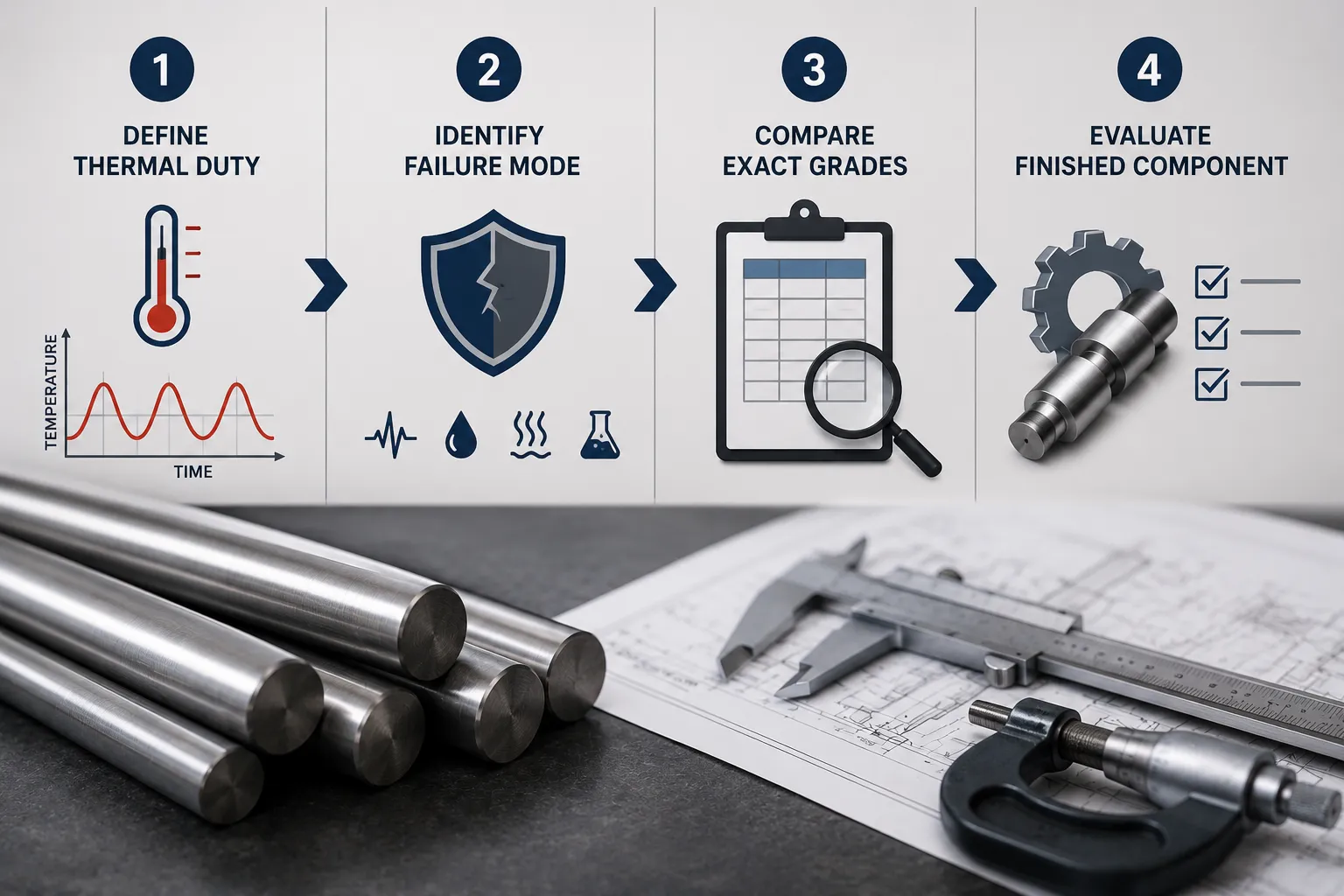
- Define the thermal duty. Record normal, peak, and upset temperatures, cycles, and exposure time.
- Identify the failure mode. Decide whether yield, creep, rupture, fatigue, oxidation, or chemical attack controls.
- Compare exact grades. Review elevated-temperature data for the diameter, product form, condition, and governing specification.
- Evaluate the finished component. Include machining, joining, thermal expansion, inspection, downtime risk, and lifecycle cost.
Precision grinding can improve diameter control, roundness, straightness, and surface finish, but it cannot convert an unsuitable alloy into a high-temperature material. Review Forte’s precision-ground round bar product range and provide the service environment with the drawing.
Final Verdict: Stainless Steel or Nickel Alloy Round Bar?
Choose nickel alloy round bar when sustained heat, load, creep, and aggressive corrosion create the primary risk. Choose stainless steel when a verified grade satisfies the duty at lower total manufacturing cost. Specialized stainless can outperform a poorly matched nickel grade, so the family alone should not decide the specification.
Compare the exact alloy, condition, diameter, load, atmosphere, and expected service life. To discuss material availability and precision-processing requirements, request a quote from Forte Precision Metals.
Frequently Asked Questions
At What Temperature Should I Switch from Stainless Steel to Nickel Alloy?
There is no universal changeover temperature. Switch when the specified stainless grade cannot meet creep, strength, oxidation, or corrosion requirements with the required safety margin.
Is 310 Stainless Steel Better Than INCONEL for Furnace Parts?
It can be for lightly loaded hardware in a compatible atmosphere. Nickel alloy is often better for higher stress, longer creep life, severe cycling, or combined heat and corrosion.
Does Stainless Steel Lose Corrosion Resistance When Heated?
It can. Scaling, sensitization, phase changes, weld condition, and atmosphere may reduce corrosion performance. Verify temperature, duration, fabrication history, and exposure chemistry for the chosen grade.
Can Stainless Steel and Nickel Alloy Round Bars Be Precision Ground?
Yes. Both can be precision ground when stock allowance, condition, straightness, hardness, size, and finish are suitable. Nickel alloys often require tighter process control because they retain strength and can work-harden.