When an engineer calls us about stainless steel round bar, the grade question usually arrives with a handful of others attached. Will it machine cleanly? Does it need to be nonmagnetic? Will it see heat? Does it need to get hard? Those questions matter more than any single grade name, because they’re what actually narrow the list.
We’re Forte Precision Metals, Inc. in Chicago, IL. We’ve supplied precision ground and cold finish round bar since 1994, and stainless is one of the nine material families we stock. Here’s how we’d approach stainless steel selection for a machined part, starting with the properties and requirements that matter most.
A Practical Way to Narrow Down Stainless Steel Round Bar Grades
Instead of comparing grades head to head, it helps to sort them by what your part requires. Start broad, then narrow.
Start With the Grade Family
Stainless steel grades fall into different families based on their metallurgical structure. Austenitic options include 303, 304, 316, 316L, 321, and 347. Martensitic grades include 410 and 420. Grade 430 is ferritic, and 440C, 440F, and 446 are classified as ferritic/martensitic.
Grade families provide a useful starting point because their metallurgical structures influence properties such as magnetism, hardness, and corrosion resistance. Identifying the properties your part requires can help narrow the options before comparing individual grades.
Use Magnetism as an Early Filter
Austenitic grades such as 303, 304, 316, 316L, 321, and 347 are generally nonmagnetic in the annealed condition. However, cold working or other processing conditions can introduce some magnetic response. When magnetic properties are critical, confirm the required magnetic permeability before selecting a grade.
When Machinability Leads the Decision
For parts with a lot of turned or milled features, machinability often drives the choice. Grade 303 offers good machinability due in part to added sulfur and is used for components such as nuts, bolts, and gears. Grade 440F is a high carbon, free machining stainless steel used in non galling, high hardness applications.
These grades serve different requirements. Grade 303 is austenitic and nonmagnetic, while 440F is magnetic. If machinability is a priority, consider magnetic requirements alongside hardness, corrosion resistance, and the component’s intended operating conditions.
When the Part Needs Hardness or Strength
Some components have to hold an edge or resist wear. Grade 410 is a widely used martensitic stainless steel found in applications such as nuts, bolts, automotive parts, and bushings. Grade 420 has higher carbon content than 410 and is harder, with applications in cutlery and surgical instruments. Grade 440C offers the greatest strength in the 440 series and is used in knifemaking.
For medical and surgical applications, we supply metal products that include grades 316, 420, and 440. Material selection depends on whether the component is intended for an implant, a surgical instrument, or another medical application.
When Heat and Oxidation Are Part of the Environment
Parts exposed to elevated temperatures require a different set of considerations. Grade 321 offers high stress and creep rupture properties, with applications in boilers and pressure vessels. Grade 347 provides creep strength and oxidation resistance for applications in food processing, chemical processing, and petroleum operations. Grade 446 is known for oxidation resistance and is used in boiler parts, burners, and injector nozzles.
If your component operates at elevated temperatures, consider the required temperature range, exposure conditions, and mechanical demands when comparing these grades.
Corrosion Resistance and Low Carbon Options
When corrosion resistance is a priority, Grade 316 is often considered for marine, pharmaceutical, and medical applications because its molybdenum content improves resistance to certain corrosive environments. Grade 316L is the extra low carbon version, used in marine applications, reactor vessels, and watches. Grade 304 is suitable for complex forms, with applications in kitchen appliances and food processing.
We’ve covered the 303 versus 304 and 316 versus 316L comparisons in separate posts, so we’ll keep this short.
Other Stainless Grades in Our Catalog
We also carry additional stainless steel options, including 302, 304/304L, 316LVM, 416 Condition T, 420F, 430F, 440, 455, 15-5 PH, 17-4, X15TN, duplex bar, and bearing shaft quality bar. If your drawing specifies one of these materials, contact us to discuss the grade and available round bar options.
Choosing the Bar Form and the Work Around It
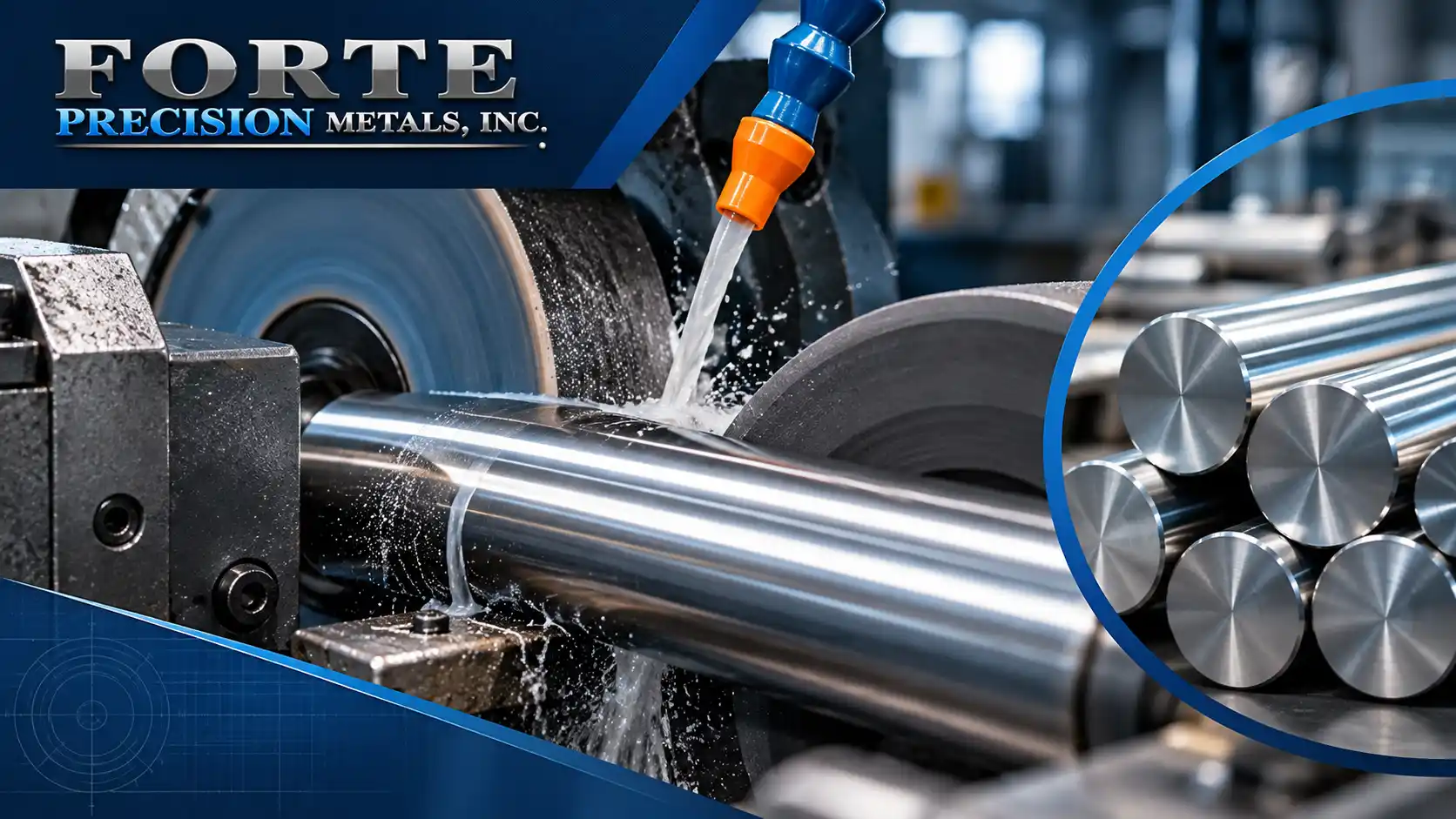
The grade is only half the decision. The bar form matters too. We supply stainless steel precision ground bar, and we also offer in house centerless grinding, which our centerless grinding post covers in detail.
If you’d like us to take the bar further, our metal turning works in stainless among other materials and holds ±0.001 in. on axis symmetric rotational components. Our polishing service includes custom stainless steel polishing and a #8 mirror finish. CNC saw cutting to length, bar straightening, and bar chamfering are available too.
What to Bring When You Ask Us About a Grade
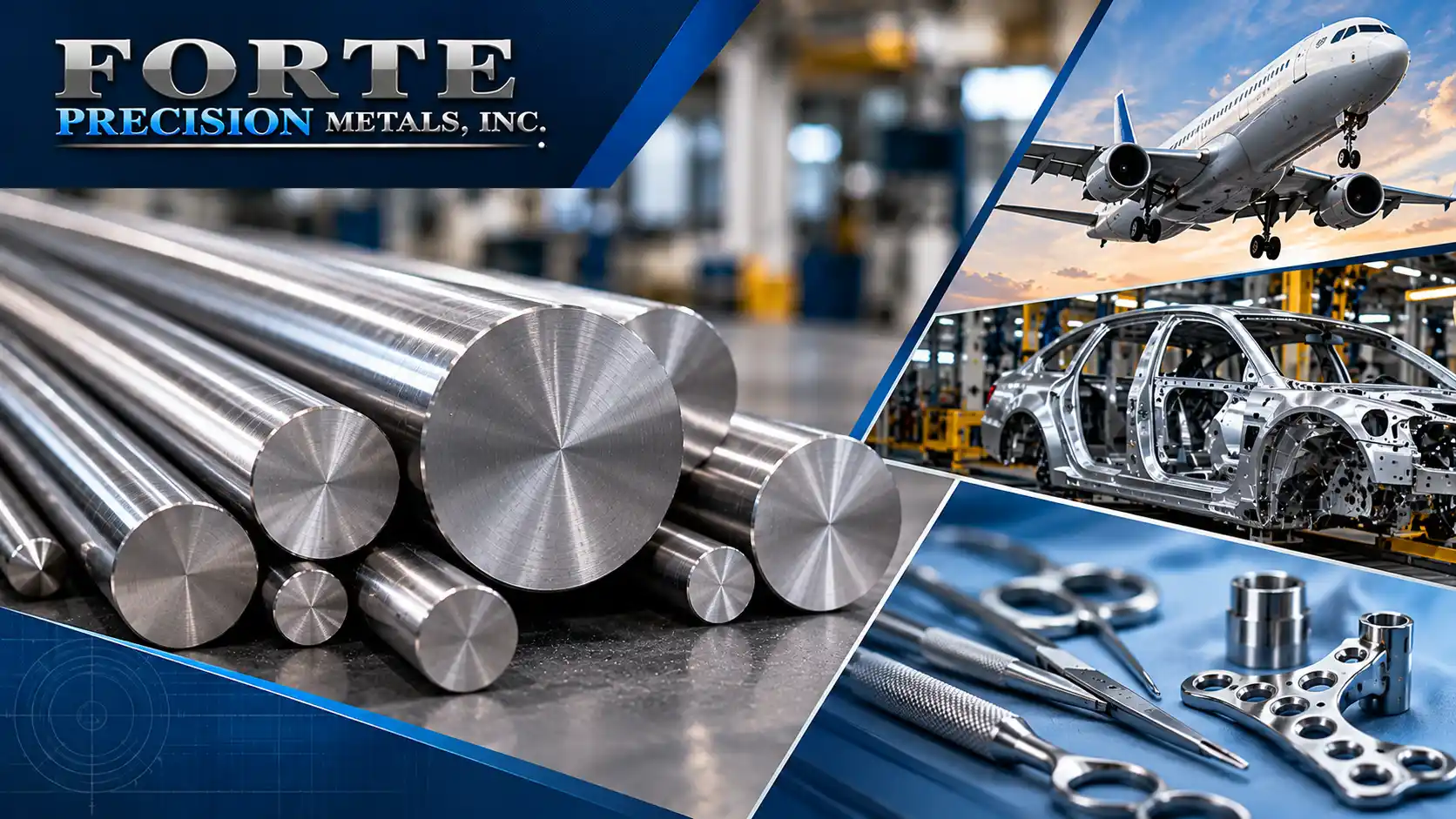
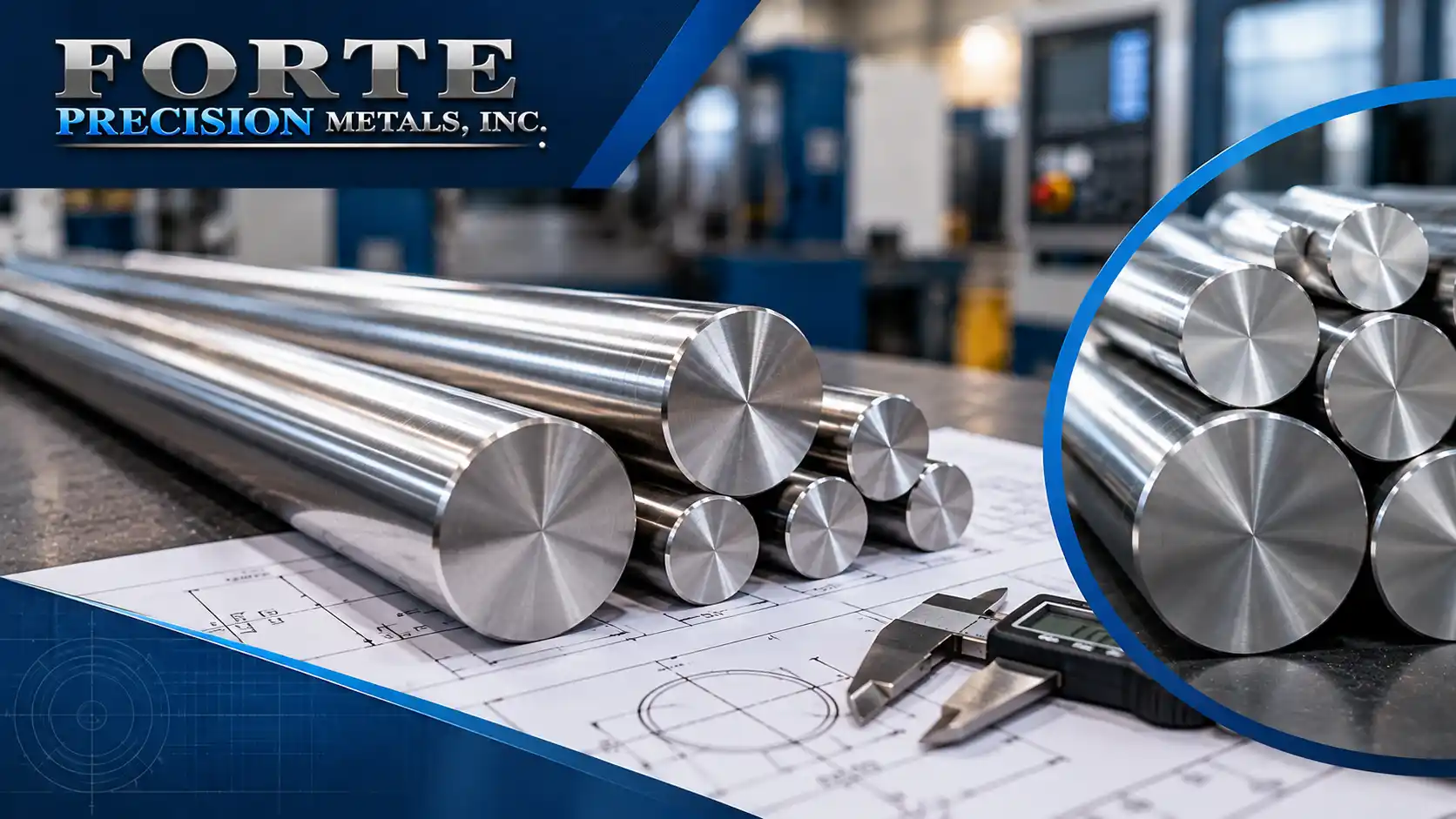
The fastest conversations start with a print and a few answers. Tell us whether the part must be nonmagnetic, how much machining it will see, whether it needs hardness, heat resistance, or corrosion resistance, and which industry it’s going into. We serve construction, automotive, food processing, medical, aerospace, military, and oil and gas customers, so sharing details about your application helps us discuss suitable material options.
Work Through Your Stainless Spec With Us
If you’re working through a stainless spec right now, call us at +1 (847) 451-8888, Monday through Saturday, 7 AM to 5 PM. You can also send your drawing through our request a quote page. Tell us what the part has to do, and we’ll help you match it to the stainless steel round bar we carry.
FAQs
Which stainless steel grades are nonmagnetic?
Austenitic grades such as 303, 304, 316, 316L, 321, and 347 are nonmagnetic.
Which stainless grades offer good machinability?
Grade 303 offers good machinability due in part to added sulfur, while 440F is a high carbon, free machining stainless steel.
Which stainless grades are used for boiler components?
Grade 321 is used in boilers and pressure vessels. Grade 446 is used in boiler parts, burners, and injector nozzles.
Which other stainless grades do you carry?
Beyond the grades above, we carry 302, 304/304L, 316LVM, 416 Condition T, 420F, 430F, 440, 455, 15-5 PH, 17-4, X15TN, duplex bar, and bearing shaft quality bar.